


 2025-04-20 22:12:50
Series Introduction:
This series of posts on economic statistics publications aims to provide clear and accessible interpretations of influential works in economic statistics worldwide. In addition to books published by academic presses, it also includes methodological manuals and thematic paper collections published by international organizations (such as OECD, UN, World Bank, IMF, EU), doctoral dissertations in economic statistics, and selected Working Papers from economic research institutions.
Book Information:
McCormick, Ted (2009), William Petty and the Ambitions of Political Arithmetic, Oxford University Press, Oxford and New York.
Introduction
Against the backdrop of an increasingly complex global economic landscape intertwined with mounting environmental challenges, economic inquiry has become both deeper and more diverse. William Petty and the Ambitions of Political Arithmetic serves as a rich intellectual archive, guiding readers back to the origins of modern economic thought. The book centers on William Petty and his ambitious project of “political arithmetic,” an early form of economic analysis that laid the foundation for later theoretical developments, particularly in quantitative methods. By tracing 17th-century economic thought, the book reveals how Petty applied scientific methods to social issues—from land surveying to population statistics—offering a historical reference for contemporary topics such as debt market analysis and resource evaluation. In today’s context, where sustainability has become a central concern, Petty’s multidimensional consideration of wealth and resources resonates with current efforts to reassess intangible capital and construct multidimensional evaluation systems. This work invites readers to explore the deep historical roots of economic theory and uncover insights that remain relevant for addressing 21st-century challenges.
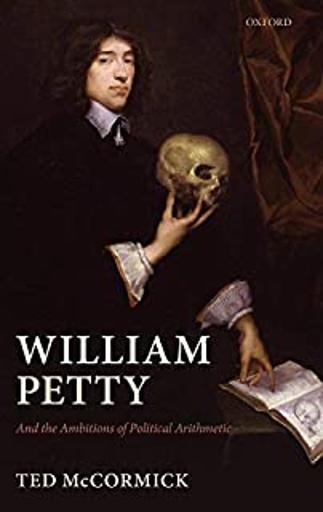
Figure. Cover of William Petty and the Ambitions of Political Arithmetic
William Petty: Life and Intellectual Origins

William Petty was a prominent 17th-century English economist, scientist, and statesman whose ideas had lasting influence. The book traces his life and intellectual development, showing how his education in Jesuit France and Cartesian Holland exposed him to cutting-edge scientific thought, particularly Descartes’ mechanical philosophy and Baconian empiricism. These influences shaped his later development of political arithmetic. Petty also collaborated with the Hartlib Circle, a group of natural philosophers, inventors, and reformers inspired by Baconian ideals, where he developed the idea of applying scientific methods to social problems. As a participant in colonial activities in Ireland, Petty’s land surveys and demographic studies provided both empirical data and ethical controversies, as his work supported imperial expansion. During the Restoration, he further explored the intersection of science, religion, and politics, gaining the support of Charles II and promoting his ideas at a higher political level.
The Birth of Political Arithmetic: Methodology and Objectives
Political arithmetic represents Petty’s most significant contribution and is widely regarded as a precursor to modern political economy. Emerging from the scientific revolution, it applied mathematical and empirical methods to social and economic issues. Influenced by Baconian empiricism, Petty believed that systematic data collection and analysis could reveal underlying social patterns. Viewing society as a mechanical system, he used quantitative methods to uncover its operational logic. Through land surveys, population statistics, and economic data collection, Petty accumulated extensive empirical evidence and applied mathematical analysis to derive insights. He coined the concept of “political arithmetic” to describe the use of quantitative methods in political decision-making, aiming to enable more scientific policymaking and promote social prosperity and stability. His approach was not only methodological but also practical, seeking to optimize resource allocation, enhance national competitiveness, and support England’s economic development and colonial expansion.
Political Arithmetic in Practice: Colonial Governance and Social Transformation
Petty’s political arithmetic had profound impacts on both England and Ireland. In England, it was used to analyze economic growth, demographic change, and social structure, leading to forward-looking ideas such as improving labor productivity and redistributing land for greater equity. His work also influenced policy decisions, including taxation and education reforms, contributing to economic and social development.
In Ireland, political arithmetic was applied to land surveys and population statistics, providing data support for British colonial policies. While his work offered new approaches to socio-economic analysis, it also facilitated colonial control, sparking debates about its ethical implications. Some scholars argue that his methods enabled colonial domination, while others highlight their contributions to economic analysis and development.
The Institutionalization of Political Arithmetic: From Tool to Statistical Science
In the 18th century, the instrumental role of political arithmetic in governance gradually diminished, but its apparent neutrality continued to embed logic of state intervention, such as population control. The book traces its dissemination and evolution, showing how Petty’s ideas spread across Europe and influenced thinkers such as Adam Smith and David Ricardo.
Over time, political arithmetic evolved from a tool of social engineering into a form of statistical reasoning, marking the transition of social sciences from instruments of governance to independent disciplines. Modern social sciences have built upon Petty’s legacy, integrating new methods and technologies into more sophisticated analytical systems. Despite these developments, political arithmetic remains a foundational source of modern statistical and economic thought.
Author Introduction

Ted McCormick
Ted McCormick is an associate professor of history at Columbia University, specializing in early modern European intellectual history, history of science, and socio-economic history. His research focuses on the transformation of knowledge in 17th-century Britain and Ireland and its role in colonial governance.
His most notable contribution is his work on William Petty and political arithmetic. In William Petty and the Ambitions of Political Arithmetic, he analyzes how statistical and economic methods were transformed into tools of colonial administration, reshaping academic understanding of the origins of political arithmetic and revealing the interplay between scientific knowledge and imperial power. The book received the Herbert Baxter Adams Prize from the American Historical Association.
McCormick’s interdisciplinary approach integrates science history, political economy, and imperial studies, offering new perspectives on the relationship between knowledge production and state power. His later work continues to explore global population movements and governance techniques, further expanding the scope of his research.
Image
sources:
https://www.nacbs.org/jbs-associate-editors/ted-mccormick
https://www.concordia.ca/faculty/ted-mccormick.html