



 2025-04-26 22:30:07
Series Introduction:
This series of posts on economic statistics publications aims to provide clear and accessible interpretations of influential works in economic statistics worldwide. In addition to books published by academic presses, it also includes methodological manuals and thematic paper collections published by international organizations (such as OECD, UN, World Bank, IMF, EU), doctoral dissertations in economic statistics, and selected Working Papers from economic research institutions.
Book Information:
McDowall, Duncan (2008), The Sum of the Satisfactions: Canada in the Age of National Accounting, McGill-Queen’s University Press, Montreal & Ithaca.
Introduction

Figure 1. Cover of The Sum of the Satisfactions: Canada in the Age of National Accounting
In today’s globalized development landscape, economic data and statistical indicators have become essential tools for measuring national prosperity, guiding policymaking, and advancing academic research. However, the historical evolution and social construction underlying these seemingly objective numbers are often overlooked. Duncan McDowall’s The Sum of the Satisfactions: Canada in the Age of National Accounting provides a rigorous historical analysis of the evolution of Canada’s national accounting system, revealing its multifaceted impact on economic decision-making, political governance, social cognition, and disciplinary development. The book not only presents the institutionalization of national accounting in Canada and its interaction with modernization processes, but more importantly, through a critical perspective, it prompts reflection on how economic statistics shape our understanding of “development” and “progress.” For readers interested in economic history, public governance, sociology of statistics, and policy studies, this work offers methodological insights and an interdisciplinary perspective, enabling them to look beyond data and grasp the complex power relations and social construction logic behind it.
Early Background and Demand: Economic Crisis and the Origins of Statistical Innovation
In the first half of the 20th century, Canada was deeply affected by the Great Depression, with economic collapse and soaring unemployment creating an urgent need for reliable data to assess national conditions and formulate recovery policies. At the same time, the outbreak of World War II further highlighted the necessity of resource allocation and wartime economic management. Under these pressures, fragmented traditional economic statistics became inadequate, and the early form of national income accounting began to emerge. The book vividly portrays the anxiety and exploration of policymakers during this period—they gradually recognized that effective economic governance must be grounded in precise measurement. This demand for data not only drove methodological innovation but also marked the early development of modern macroeconomic management.
Key Figures and Institutions: Statistical Pioneers and Institutional Foundations
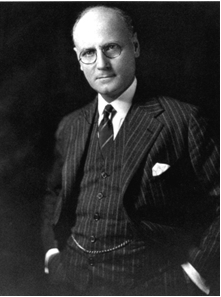
Robert Hamilton Coats
The book adopts a biographical approach to highlight the founding figure of Canada’s statistical system—Robert Hamilton Coats, the first Chief Statistician of the Dominion Bureau of Statistics (later Statistics Canada). Combining scholarly rigor with administrative acumen, Coats led the design of Canada’s early national income accounting framework and promoted the transition of statistical work from simple data collection to systematic economic analysis. The book emphasizes that despite limited resources, Coats and his team leveraged international cooperation—particularly with institutions such as the League of Nations—to adapt British and American experience to Canada’s federal system, creating a statistical framework that balanced international standards with domestic needs. This section not only illustrates individual contributions but also reveals the deep interaction between scientific statistics and nation-building.
Evolution of the National Accounting System: From Wartime Management to Global Innovation
The development of Canada’s national accounting system was not a linear process but one characterized by trial and error. For instance, in the 1950s, the introduction of GDP accounting required multiple revisions due to inconsistent data sources. The book traces its evolution in stages: during the 1930s–1940s, the system focused on wartime economic management, establishing initial national income and production accounts centered on industrial output and resource allocation; in the 1950s–1960s, influenced by Keynesian economics, the system expanded to include investment, consumption, and government expenditure, forming the foundation of modern GDP accounting; after the 1970s, under globalization and welfare state development, innovations such as regional accounts and environmental satellite accounts were introduced to address debates on the “quality of growth.”
By comparing statistical manuals, government reports, and international standards such as the UN System of National Accounts (SNA), the author demonstrates how statistical methods evolved alongside economic theory, computational technology, and social needs. For example, early reliance on manual enterprise surveys gradually gave way to computer-based models, while the 2008 financial crisis prompted renewed attention to financial risk measurement.
Impact on Policy and Society: How National Accounts Shape Governance and Perception
National accounting is not merely a technical tool; by defining what is measurable and what is not, it functions as an implicit instrument of power. Through case studies, the book reveals its profound influence: in policymaking, Canada used national accounts data in the 1950s to design unemployment assistance programs, linking social spending with economic growth indicators; in regional governance, the 1960s Equalization Program relied on regional accounts to quantify fiscal capacity and support redistribution; in public perception, frequent media use of GDP data gradually equated economic growth with social progress, influencing voter evaluations of government performance. The author particularly emphasizes the problem of “selective visibility,” noting that unpaid household labor—predominantly performed by women—was long excluded from accounts until gender accounting emerged in the 1990s.
Controversies and Reflections: Measurement Boundaries and Value Conflicts
The widespread use of national accounts has also generated significant debates. Questions arise over measurement boundaries—should underground economic activities such as illicit trade be included? Adjustments to these methods have occasionally sparked political controversy in Canada. Environmental critiques in the 1970s argued that GDP measures only logging output but ignores forest loss, leading to experiments with “green GDP.” Cultural challenges also exist, as Indigenous subsistence economies are difficult to quantify in monetary terms, resulting in policy blind spots.
Rather than merely presenting these debates, the book draws on archival research and interviews to reveal the interactions among statisticians, policymakers, and the public, highlighting national accounting as a socially constructed system—both scientific and political in nature.
Author Introduction
Duncan McDowall
Duncan McDowall is a distinguished Canadian economic historian and professor at Carleton University, specializing in institutional transformations in Canada’s economic governance. Known for his “institutional history” approach, he analyzes domains such as national accounting, banking development, and energy policy to uncover the political logic and social implications behind technical change.
His work The Sum of the Satisfactions provides a comprehensive account of the development of Canada’s national accounting system, filling a major gap in the study of Canadian economic statistics history. His book Quick to the Frontier examines the relationship between the Royal Bank of Canada and national development. McDowall’s research is widely cited in academia and contributes to contemporary policymaking by providing historical context. In recent years, he has extended his research to statistical transformations in the digital economy and continues to collaborate with Statistics Canada on academic projects.
His interdisciplinary approach integrates history, economics, and political science, offering a vivid narrative of the complex interaction between economic knowledge and state governance in Canada’s modernization process.
Image
sources:
https://en.wikipedia.org/wiki/Robert_H._Coats
https://cihe.ca/duncan-l-mcdowall/