


 2025-04-29 22:31:37
Series Introduction:
This series of posts on economic statistics publications aims to provide clear and accessible interpretations of influential works in economic statistics worldwide. In addition to books published by academic presses, it also includes methodological manuals and thematic paper collections published by international organizations (such as OECD, UN, World Bank, IMF, EU), doctoral dissertations in economic statistics, and selected Working Papers from economic research institutions.
Book Information:
Fioramonti, Lorenzo (2013), Gross Domestic Problem: The Politics Behind the World's Most Powerful Number, Zed Books, London, UK.
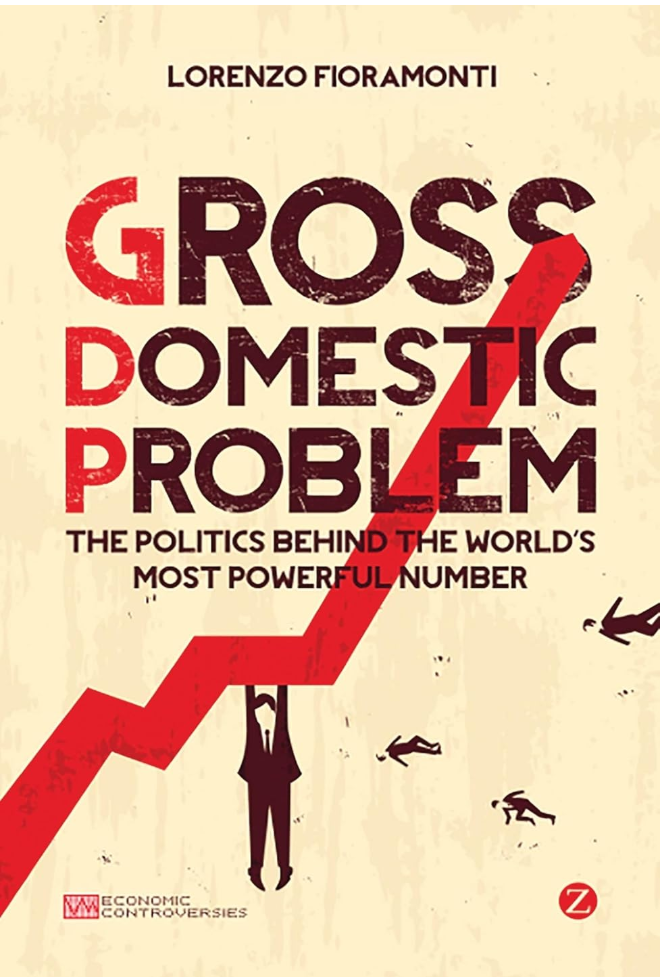
Figure 1. Cover of Gross Domestic Problem
Introduction
In modern discourse, Gross Domestic Product (GDP) is undoubtedly one of the most dominant economic indicators. It not only shapes government policy directions and influences financial market sentiment, but also permeates public understanding of what constitutes “national development.” In Gross Domestic Problem, Lorenzo Fioramonti sharply argues that this “numerical myth,” born during the Great Depression, has come to dominate the global development agenda with its singular focus on growth—it constructs an illusion of “prosperity” while obscuring social inequality, ecological depletion, and spiritual emptiness. By tracing the political-economic origins of GDP, the book reveals its nature as an instrument of power, exposes its systemic blind spots in measuring social progress, and highlights alternative approaches that seek to move beyond it. This work offers both historical insight and conceptual inspiration for understanding contemporary economic dilemmas.
The Birth of GDP
GDP originated in the United States during the Great Depression of the 1930s, when governments urgently needed a systematic indicator to assess economic conditions and policy effectiveness. Economists such as Simon Kuznets introduced the concept of Gross National Product (GNP), aggregating the market value of goods and services while accounting for production costs, thereby providing a quantitative basis for macroeconomic management. Shortly thereafter, World War II transformed GNP into a critical planning tool for wartime economies, enabling the United States to allocate resources efficiently to support both military production and domestic consumption.
After the war, this indicator was institutionalized globally and became a central metric in Cold War competition: capitalist countries emphasized GNP/GDP to measure economic strength, while socialist systems focused on material output. With the rise of globalization, international institutions such as the World Bank, IMF, and OECD elevated GDP to the core of global economic ranking, development strategy, and international cooperation frameworks, making it a universal benchmark.
Problems and Critiques of GDP
Despite its simplicity and comparability, GDP has significant limitations. First, it focuses solely on total output growth while ignoring income distribution—since the 1980s, inequality has increased in many OECD countries, yet GDP growth figures obscure the decline in welfare among lower-income groups. Second, GDP fails to account for environmental costs: pollution cleanup and disaster recovery are counted as growth, while ecological losses such as deforestation are excluded, highlighting a fundamental disconnect between economic indicators and environmental sustainability. Third, GDP neglects non-market activities, excluding unpaid household labor and volunteer work while emphasizing financial transactions and luxury consumption, thereby distorting the relationship between economic indicators and real quality of life.
More critically, GDP logic can produce “perverse growth,” where crises themselves generate economic activity—such as increased healthcare spending from accidents or reconstruction after disasters. Historical examples, including post-9/11 consumption campaigns and quantitative easing after the 2008 financial crisis, illustrate how economic systems may convert crises into growth drivers. Economists such as Nordhaus and Tobin warned as early as the 1970s that when defensive expenditures are treated as growth and welfare is reduced to monetary flows, societies risk paying for “growth with illness.”
Alternative Indicators and Practices
In response to GDP’s limitations, alternative frameworks have emerged. The United Nations Development Programme’s Human Development Index (HDI) incorporates life expectancy, education, and income, marking a shift from quantitative growth to qualitative development. Bhutan’s Gross National Happiness (GNH) goes further by including psychological well-being, cultural preservation, and environmental sustainability, offering a radically different vision of development.
In practice, movements such as “degrowth” advocate reducing excessive production and consumption while promoting localized economies and resource sharing. The Happy Planet Index integrates ecological efficiency into welfare measurement, demonstrating that high well-being does not require high resource consumption. Experiments such as community currencies and social enterprises illustrate the feasibility of alternative economic systems that prioritize human and ecological well-being over pure market output.
Conclusion
The limitations of GDP reflect a broader crisis of modernity—an overemphasis on efficiency at the expense of morality, ecology, and social welfare. Fioramonti does not call for abandoning GDP entirely, but rather for moving toward a “post-GDP” era where it is no longer the sole benchmark. This shift represents not only a methodological reform but also a rethinking of what constitutes prosperity.
At a deeper level, the critique of GDP represents a return to fundamental values. Recognizing that growth is a means rather than an end allows societies to reconsider the importance of community, environmental sustainability, and human well-being. As the book suggests, true progress begins with asking what kind of life we ultimately seek—an enduring question that transcends any single economic indicator.
Author Introduction

Lorenzo Fioramonti
Lorenzo Fioramonti is an Italian political economist and the founding director of the Institute for Sustainability at the University of Surrey. He previously served as a professor at the University of Pretoria and held positions at institutions such as the University of Heidelberg and the United Nations University. His research focuses on the political nature of economic indicators and their impact on society, environment, and governance.
In works such as Gross Domestic Problem, The World After GDP, and Wellbeing Economy, he critically examines the limitations of GDP and advocates for alternative frameworks centered on well-being, sustainability, and social justice. In addition to his academic contributions, he has served as Italy’s Minister of Education, University, and Research, promoting reforms in sustainability education. His work has had broad influence across academia, policy, and practice.
Image
sources:
https://books.google.com.hk/books/about/Gross_Domestic_Problem.html
https://www.grottaglieinrete.it/it/il-vice-ministro-lorenzo-fioramonti-a-grottaglie-per-un-convegno-sulla-riconversione-economica-sostenibile-del-territorio-ionico/