



 2025-03-22 16:57:17
Series Introduction:
The economic statistics works series tweets will provide accessible interpretations of influential international economic statistics works. In addition to economic statistics works published by publishing houses, it also includes methodological manuals and thematic paper collections on economic statistics published by international organizations (OECD, UN, World Bank, IMF, EU, etc.), doctoral dissertations on economic statistics topics, and some working papers from economic research institutions.
Work Information: Jean-Paul, Fitoussi, and Durand Martine. Beyond GDP: Measuring What Counts for Economic and Social Performance. OECD Publishing, 2018. https://www.oecd.org/en/publications/2018/11/beyond-gdp_g1g98ae6.html
In today's complex and ever-changing global economic environment, the traditional economic measurement system centered on GDP faces unprecedented challenges. The book Beyond GDP: Measuring What Counts for Economic and Social Performance emerged in response, focusing on moving beyond traditional GDP indicators to explore how to build a multidimensional indicator system that reflects social fairness, environmental sustainability, and public well-being when assessing national economic performance and social progress. It provides the economics community with a new perspective and methodology, promoting a paradigm shift in economic performance measurement from a single number to multidimensional indicators.
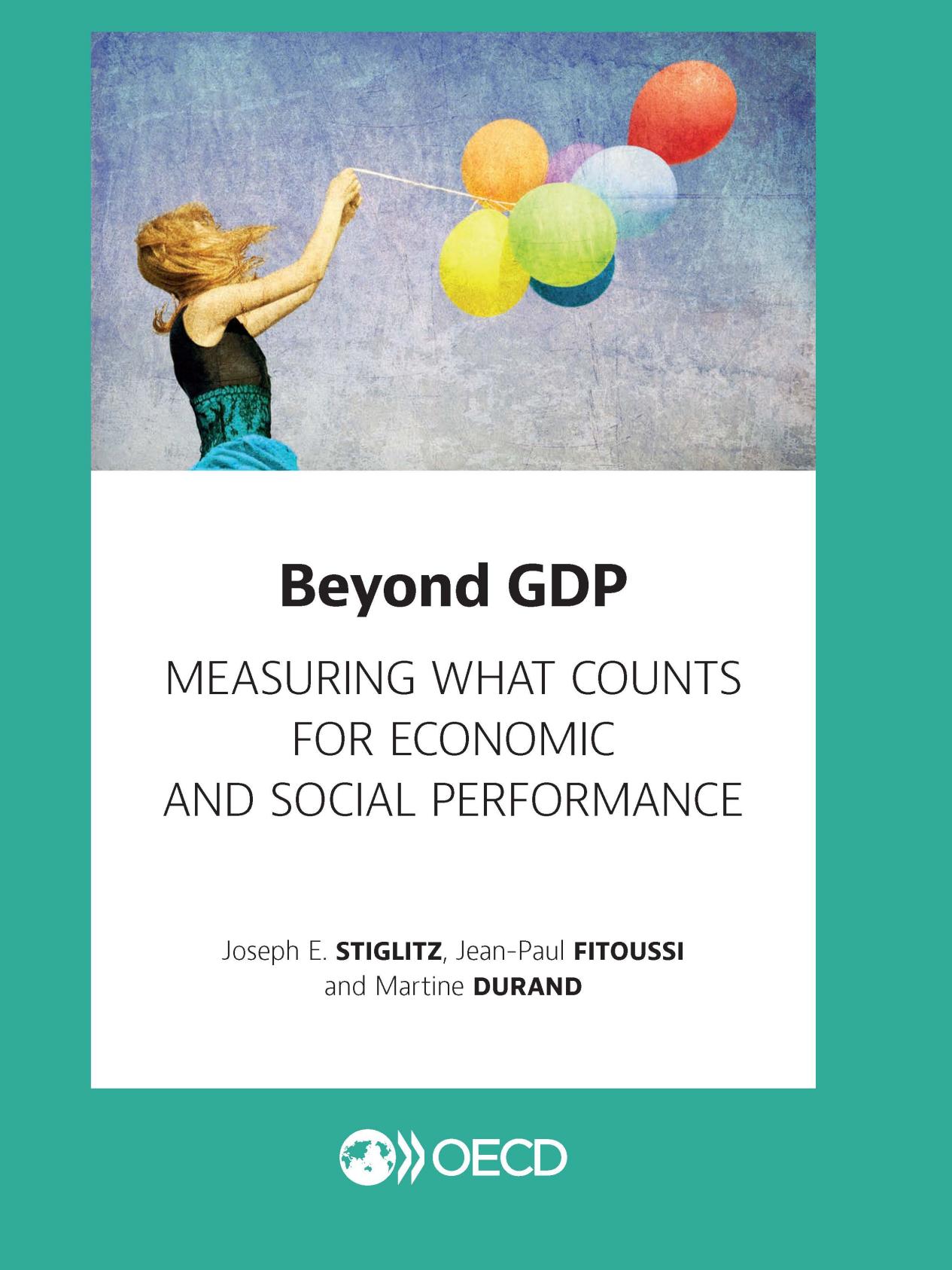
Figure 1. Cover of "Beyond GDP: Measuring the Factors Affecting Economic and Social Performance"
Context: The Limitations of GDP and New Demands
Since the Great Depression of the 1930s, GDP has served as the core indicator for measuring economic activity and has consistently dominated macroeconomic analysis and policy-making. However, as the relationship between the economy and society has become increasingly complex, the limitations of GDP have gradually become apparent. GDP is merely a measure of economic activity; it cannot accurately reflect the extent of income inequality, ignores the depletion of environmental resources and the degradation of ecosystems, and fails to encompass non-economic factors in social well-being such as the quality of education, health levels, and social trust that affect people's quality of life. Nor can it be expected to reliably represent national strength. These issues have laid the groundwork for the emergence of the "beyond GDP" agenda. The outbreak of the global financial crisis in 2008 exposed the fragility of the traditional economic measurement system to the public. The economic recession not only led to a decline in GDP but also triggered widespread social problems and a crisis of trust, compelling academia to rethink the standards for measuring economic and social performance.
In the book, the author critiques the limitations of the past overreliance on GDP as a single economic indicator, arguing that this approach not only neglects key issues such as income distribution, economic security, and environmental costs but also tends to lead to misjudgments and governance difficulties in actual policy-making. Through data-driven analysis and the application of interdisciplinary methods, the author provides a completely new framework, whose core idea is that only by including more factors closely related to people's livelihoods in the measurement system can we truly achieve an accurate grasp of the overall state of the economy and society, thereby offering more forward-looking and actionable basis for policy design.
Core Theoretical Framework: Multi-Dimensional Social Welfare Measurement
The book constructs a multi-dimensional social welfare measurement framework that goes beyond traditional GDP, covering economic, social, and environmental dimensions. Its core theoretical basis is that social welfare is the result of the combined effects of economic, social, and environmental factors, and a single indicator cannot fully capture its essence. By screening and integrating indicators from different dimensions, a comprehensive dashboard is formed to more accurately reflect the overall development status of a country or region. For example, within the economic dimension, in addition to GDP, indicators such as income distribution, employment quality, and economic sense of security are included; within the social dimension, attention is given to phenomena such as educational equity, health equality, social trust, and social capital; within the environmental dimension, factors such as natural resource consumption, environmental pollution, and ecosystem service value are considered. This multi-dimensional framework not only enriches the perspective of economic analysis but also provides a more comprehensive basis for policy-making.
Methodological Innovation: Interdisciplinary Comprehensive Assessment
To achieve more precise measurement of multidimensional social well-being, the author proposes an interdisciplinary research approach. Firstly, in terms of data collection, macroeconomic data, micro-survey data, and environmental monitoring data are integrated to break traditional data silos, forming a comprehensive database [4]. For example, household survey data is used to obtain individual-level information on income, consumption, education, and health, combined with environmental data to assess the impact of ecosystems on human well-being. Secondly, advanced statistical techniques and econometric methods, such as panel data analysis and structural equation modeling, are employed to handle complex data relationships and reveal the interaction mechanisms between various dimensional indicators. In addition, subjective well-being measurement methods are introduced, collecting individual subjective evaluations on life satisfaction and happiness through surveys, filling the gap of objective indicators that are difficult to capture the actual feelings of the public. This methodology, combining theory and empirical research, not only enriches the connotation of academic research but also makes the connection between data and policy practice closer, highlighting the interaction effects between economic statistics and social governance.
In terms of income distribution, the author constructs a scale containing multidimensional poverty indices and inequality indicators, finding that even in countries with economic growth, the living conditions of the lower-income population have not improved, and the wealth gap continues to widen. It is suggested that policymakers should pay attention to the design and implementation of income redistribution policies, such as progressive taxation and social welfare transfers, to promote social equity. Regarding environmental sustainability, the study points out that the economic growth models of many countries are unsustainable, often overly dependent on resource consumption and carbon emissions. The author calls for strengthening the implementation of green economic policies, actively promoting the development of renewable energy and industrial upgrading. The book provides a detailed analysis of the implementation effects of the EU Emissions Trading System, offering a reference for other regions. At the same time, the research shows that social trust and social capital have a significant promoting effect on economic development, and the government should enhance social cohesion, reduce transaction costs, and improve economic efficiency through transparent decision-making and the improvement of public services.
Academia and Reality: Driving Transformation in Economic Research and Policy Practice
The book *Beyond GDP: Measuring Factors that Affect Economic and Social Performance* systematically critiques the limitations of the traditional GDP-centric approach and provides academia with a theoretical framework and practical guide for multidimensional measurement of social well-being, promoting a paradigm shift in economic research from focusing solely on economic growth to comprehensive social progress. For contemporary scholars, the book is not only a methodological compass but also a key reference for inspiring new ideas and expanding research domains. It reminds scholars to consider social, environmental, and other factors comprehensively when analyzing economic phenomena and to flexibly apply interdisciplinary methods to reveal the operational laws of complex economic and social systems. At the same time, the book's rich empirical cases and policy analyses offer valuable references for policymakers, helping administrative authorities design more inclusive and sustainable policies to tackle the numerous challenges facing the world today.
In future research and practice, the multidimensional index system and its measurement methods proposed in the book will provide an important reference framework, guiding academia in continuing to improve statistical methods, update economic theories, and enhance the scientific rigor of policy design. It not only provides scholars with new perspectives for understanding the mechanisms of economic operation but also offers theoretical foundations and practical examples for society to explore civilizational progress and sustainable development. The publication of this work marks a profound transformation in the paradigms of economic statistics and social science measurement, and its academic value and practical significance will continue to ferment in future interdisciplinary research, contributing wisdom and solutions toward building a more just, transparent, and sustainable society.
Author Introduction
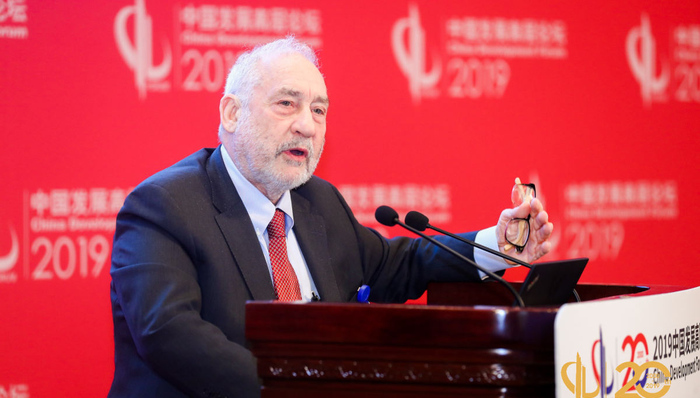
Figure 2. Joseph Stiglitz
Joseph Eugene Stiglitz (born February 9, 1943) is a renowned American economist, a member of the American Academy of Arts and Sciences, the National Academy of Sciences, and the American Philosophical Society. He currently holds the position of University Professor at Columbia University in the United States and serves as co-chair of the High-Level Expert Group on the Measurement of Economic Performance and Social Progress at the Organisation for Economic Co-operation and Development (OECD), as well as Chief Economist at the Roosevelt Institute.
Stiglitz has made outstanding achievements in the field of economics and won the John Bates Clark Medal in 1979. He has pioneering research in the field of information economics, proposing the famous "theory of asymmetric information," which emphasizes the importance of information flow in resource allocation and economic decision-making. In 2001, he shared the Nobel Prize in Economics with George Akerlof and Michael Spence "for laying the foundation for the theory of markets with asymmetric information." In 2011, Stiglitz was named one of the "100 Most Influential People in the World" by Time magazine.
Stiglitz's research covers numerous areas, including income distribution, risk theory, corporate governance, public policy, macroeconomics, and globalization. He has published many influential works such as People, Power, and Profits; Rewriting the European Economy: A Solution to Save the Eurozone; Globalization and Its Discontents; The Euro Crisis; and The Price of Inequality. He has also served as Senior Vice President and Chief Economist of the World Bank, making significant contributions at the intersection of policy research, economic theory, and macroeconomic policy.
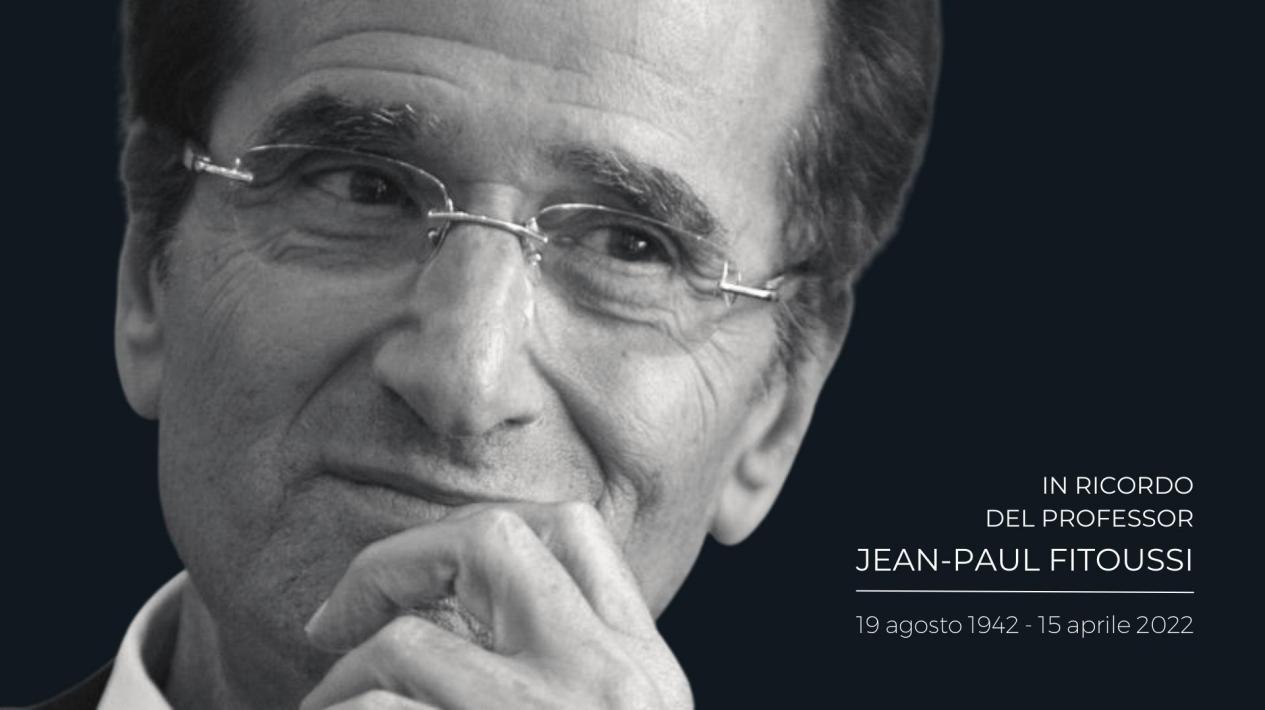
Figure 3. Jean-Paul Fitoussi
Jean-Paul Fitoussi (August 19, 1942 – April 15, 2022) was a French economist and one of the representatives of New Keynesianism. Fitoussi began teaching at Sciences Po in Paris in 1982 and founded its Economics Department. From 1989 to 2010, he served as the chairman of the Observatoire Français des Conjonctures Économiques (OFCE).
Fitoussi was one of the leading figures of New Keynesianism. He firmly supported Keynesian theory, criticized monetary economics and austerity policies, and provided new perspectives and theoretical foundations for the formulation of macroeconomic policy.
He collaborated with Nobel laureates Joseph Stiglitz and Amartya Sen in guiding the work of the Commission on the Measurement of Economic Performance and Social Progress, proposing new welfare indicators, challenging GDP as the sole standard for measuring economic and social progress, and promoting a more comprehensive understanding of economic performance and social progress. Together, they co-authored "Mis-measuring Our Lives," in which they questioned the reliability of GDP as an economic indicator, sparking widespread global discussion and research on methods of measuring economic and social well-being.
Additionally, Fitoussi provided advice and consultancy on economic policy for institutions such as the European Parliament and the United Nations, contributing positively to policymaking on European integration, inequality, welfare, and environmental sustainability.
Fitoussi long focused on important social issues such as social inequality and environmental sustainability, promoting widespread social attention and discussion on these topics through academic research and public speaking. He was awarded the French National Order of Merit, the Legion of Honour, the Grand Cross of Portugal, the Commander of the Italian Republic, and in 2017 he received the Picodella Mirandola International Award.
Figure 4. Martine Durand
Martine Durand is the Chief Statistician of the Organisation for Economic Co-operation and Development (OECD) and one of the key figures in statistical work. She has participated in and led the OECD Better Life Initiative. The "Measuring Progress" framework she proposed provides both theoretical and practical guidance on how to better measure social and economic progress, promoting the application and development of statistics in social science research.
Durand joined the OECD in 1983 as an economist in the Economics Department, responsible for researching policy issues related to international competitiveness, oil and commodities markets, and labor markets in OECD countries.
Durand has served as Deputy Director for Employment, Labour and Social Affairs, responsible for OECD work on employment and training policies, health and social policies, and international migration. Her work has been published in OECD reports, such as the OECD International Migration Outlook, OECD Employment Outlook, Pensions at a Glance, and Health at a Glance.
As an international authority on measuring economic and social conditions, Durand is dedicated to transforming statistical results into practical recommendations and programs for policy-making and social development. She has had a profound influence in the field of data statistics and analysis, providing important data support and methodological guidance for economic and social research worldwide and for improving social well-being.
References:
[1] Qiu Dong. A New Theory by Deaton Beyond GDP—Dare to Ask Where the Road Leads [J]. China Statistics, 2020, (05): 58-61.
[2] Qiu Dong. In-Depth Exploration of Economic Measurement Issues Implied by ICP—Review of "GDP, Welfare and Health: Some Reflections on the 2017 Round of ICP" [J]. Statistical Research, 2021, 38(09): 143-156. DOI:10.19343/j.cnki.11-1302/c.2021.09.011.
[3] Li Dongju. The Continuous Importance of the "Beyond GDP" Agenda [J]. Economic Statistics (Quarterly), 2018, (02): 226-244.
[4] Wang Yong, Li Minghao, Sun Weixin. The Intrinsic Logic, Theoretical System and Practical Value of Welfare Measurement—Focusing on the Evolution of OECD Official Texts Beyond GDP [J]. Statistical Research, 2024, 41(01): 135-147. DOI:10.19343/j.cnki.11-1302/c.2024.01.011.
Sources of images and text materials include but are not limited to:
Vantea (https://www.vantea.com/2022/04/15/vantea-SMART-il-ricordo-del-professor-jean-paul-fitoussi/)
Jiemian News https://www.jiemian.com/article/2977792.html
Organisation for Economic Co-operation and Development (https://www.oecd.org/en/publications/2018/11/beyond-gdp_g1g98ae6.html)
Bosch (https://www.bosch.com/stories/martine-durand/)
Centre for Economic Policy Research (https://cepr.org/about/people/martine-durand)
United Nations Statistics Division (https://unstats.un.org/unsd/undataforum/dubai-2018/speakers/martine-durand-2/)
Wikipedia (https://en.wikipedia.org/wiki/Joseph_Stiglitz, https://en.wikipedia.org/wiki/Jean-Paul_Fitoussi)