



 2025-03-29 21:14:40
Series Introduction:
This series of posts on economic statistics publications aims to provide clear and accessible interpretations of influential works in economic statistics worldwide. In addition to books published by academic presses, it also includes methodological manuals and thematic paper collections published by international organizations (such as OECD, UN, World Bank, IMF, EU), doctoral dissertations in economic statistics, and selected Working Papers from economic research institutions.
Book Information:
Measuring Poverty Around the
World
Anthony B. Atkinson
Edited by John Micklewright and
Andrea Brandolini
With Afterwords by François Bourguignon and
Nicholas Stern
Princeton University Press, Princeton and Oxford
I. Recommendation
Poverty is a fracture etched into the spine of the world, and Measuring Poverty Around the World is the ruler that measures its depth. This book, with a calm tone and humane data, unveils the multiple dimensions of poverty—from cold income statistics to obscured aspects of dignity, opportunity, and hope. It tells not only the story of statistical methods, but also how humanity defines suffering while exploring ways to eliminate it.
Whether in the models of economists or the silent sighs from field investigations, everything intertwines into a mirror reflecting the paradox of our era: scarcity within abundance, and the unspoken ethics and choices behind measurement. If you want to understand the true weight of poverty, this book will give you answers—and perhaps make you ask new questions.
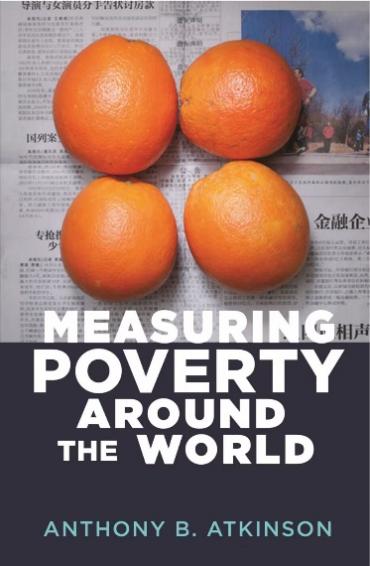
Figure 1. Cover of Measuring Poverty Around the World
II. Academic Contributions
(1) Theoretical Innovation
Atkinson’s Measuring Poverty Around the World integrates economics with theories of social justice, shifting poverty research from an “income-centered” approach to a “multidimensional rights-based” framework. It combines Amartya Sen’s capability deprivation theory (such as lack of education and health) with the concept of social exclusion (such as restricted political participation and identity discrimination), emphasizing that poverty is not only an economic issue but also a deprivation of rights and opportunities.
The author conceptualizes poverty as a complex, multidimensional social phenomenon, focusing not only on material deprivation but also on capability deprivation and social exclusion. This transformation encourages researchers and policymakers to reconsider the definition and measurement of poverty, providing a theoretical foundation for a more comprehensive understanding of its nature.
(2) Practical Significance
This book provides policy design tools for international organizations (such as the World Bank and the International Labour Organization) and national governments. Accurate poverty measurement helps policymakers optimize resource allocation and develop more targeted poverty reduction strategies.
For example, the multidimensional poverty measurement methods advocated in the book have been adopted by some countries and international organizations to monitor and evaluate poverty conditions, providing important support for social policy formulation and aid allocation.
It not only advances poverty research theoretically but also provides scientific support for poverty reduction policies in practice. Through precise and human-centered poverty measurement, we can truly fulfill the global commitment of “leaving no one behind” and move toward the goals of poverty eradication, social equity, and sustainable development.
Future research should build upon Atkinson’s work by addressing emerging issues such as digital poverty and climate change, integrating new data sources and technological tools to continuously improve poverty measurement methods. At the same time, strengthening international cooperation and improving data quality and comparability will provide stronger support for global poverty reduction efforts.
III. Book Content
(1) Multidimensionality and Methodology of Poverty Measurement
The book emphasizes that poverty is not merely a problem of insufficient income or consumption, but must also incorporate multidimensional indicators such as basic needs (food, healthcare), development capabilities (education, disability), and rights protection (political participation, social exclusion).
It examines the advantages and disadvantages of approaches such as absolute poverty lines, relative poverty lines, and multidimensional poverty indices, while addressing issues of data comparability. From philosophical, economic, and sociological perspectives, it analyzes the multidimensional nature of poverty and distinguishes between absolute poverty and relative poverty.
Absolute poverty is represented by the World Bank’s $1.90 per day standard, focusing on basic survival needs, while relative poverty is defined by benchmarks such as 60% of median income in the European Union, emphasizing relative deprivation within society.
The book highlights that poverty measurement directly affects policy effectiveness and resource allocation, making it a key element in achieving the United Nations Sustainable Development Goals (SDGs).
In terms of multidimensional poverty theory, it critiques traditional one-dimensional approaches and introduces Sen’s capability deprivation framework, advocating the inclusion of non-monetary indicators such as health, education, housing, and security. It also emphasizes challenges in data collection, including limited survey coverage in developing countries, sampling bias, and time lags.
Furthermore, the book provides a critical analysis of different poverty line setting methods, comparing approaches such as the cost of basic needs method and the food energy intake method, and highlights limitations in global poverty comparisons, including controversies over purchasing power parity (PPP) adjustments, differences in urban and rural living costs, and cultural influences on defining “needs.”
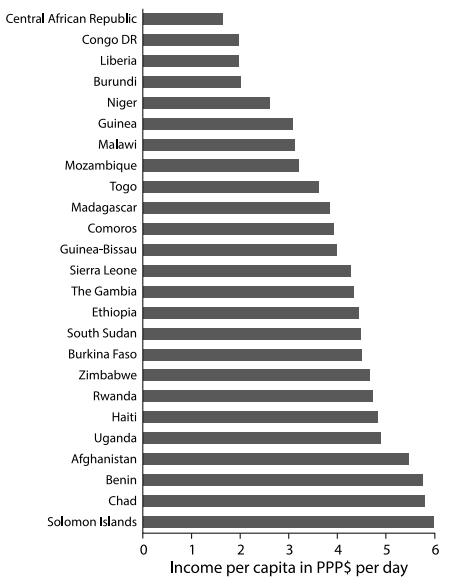
Figure 2. Per capita income after purchasing power parity adjustment across countries
(2) History and Current Situation of Global Poverty
The book provides an in-depth analysis of poverty patterns across different regions.
In Asia, it explores the relationship between economic growth and poverty reduction in countries such as China and India, while noting that rising inequality may offset some gains.
In Africa, it analyzes the impact of the resource curse, conflict, and climate vulnerability on poverty, particularly the persistence of extreme poverty in Sub-Saharan Africa.
In Latin America, it evaluates the effectiveness of social policies such as conditional cash transfers.
In developed countries, it reveals forms of relative poverty, such as the “working poor” in the United States and child poverty in Europe.
The book also highlights current global challenges, including extreme poverty in Sub-Saharan Africa and Central Asia, as well as the emergence of new poverty groups in developed countries due to deindustrialization and rising inequality.
It reviews international poverty reduction efforts since the 20th century, including the United States’ “War on Poverty,” the European Union’s poverty reduction targets, and achievements in developing countries such as China.
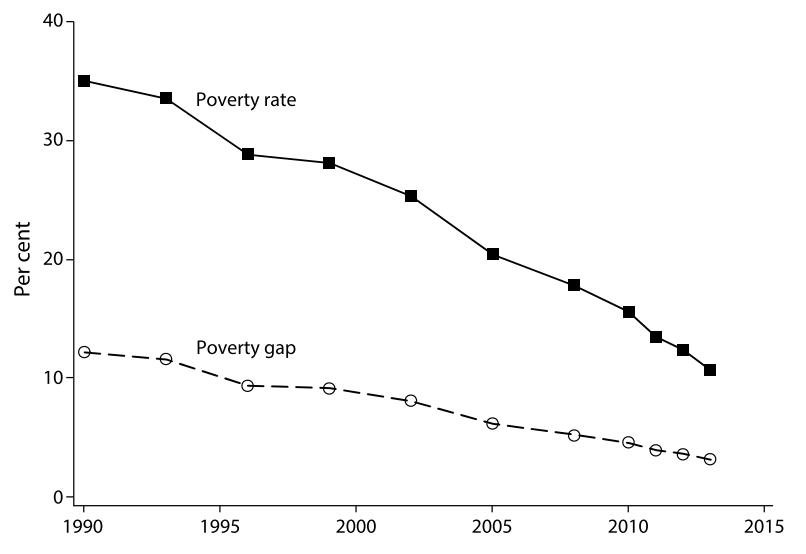
Figure 3. Global poverty rate and poverty gap
(3) Structural Contradictions of Global Poverty
The book critically reflects on the dual role of international organizations such as the World Bank in poverty reduction. On the one hand, they promote development goals; on the other hand, by maintaining the existing global economic order, they may trap developing countries at the lower end of the value chain, exacerbating deindustrialization and unemployment.
For example, policies requiring market liberalization may expose domestic industries to competition from multinational corporations, leading to job losses, as seen in some Latin American countries. This “aid–dependency” cycle traps poorer nations in reliance on resource exports and limits their ability to move up the value chain.
The nature of poverty also varies across regions. In Sub-Saharan Africa, due to slow economic growth, extreme poverty remains persistent, with high poverty rates and low education coverage. In developed countries, new forms of poverty emerge due to welfare reductions and industrial restructuring.
In transition economies, such as former Soviet and Eastern European countries, the collapse of social security systems during privatization in the 1990s led to sharp increases in poverty rates.
(4) Policy and Practical Challenges
Despite the limitations of existing international policies, the book emphasizes that only through reforming global cooperation mechanisms—such as data sharing and technology transfer—can the “aid–dependency” cycle be broken and truly equitable poverty reduction be achieved.
The author calls for strengthening global statistical cooperation, increasing survey frequency and transparency, and addressing political manipulation of poverty data. He advocates multidimensional interventions combining cash transfers and social services, promotes global tax coordination to increase funding for poverty reduction, and highlights the importance of climate adaptation policies in protecting vulnerable populations.
He also proposes establishing a “global poverty governance alliance” to promote data sharing, technology transfer (such as drought-resistant agricultural technologies), and fair trade (such as removing agricultural subsidies), aiming to fundamentally reshape the international economic order.
The book integrates development economics, sociology, and political philosophy, incorporating global justice theory (such as Thomas Pogge) to critique ethical shortcomings in international aid and call for greater responsibility from wealthy nations.
Its multidimensional poverty index (MPI) framework has been incorporated into the United Nations Sustainable Development Goals (SDGs) and serves as a benchmark for policymaking. The concept of a “dynamic poverty line” is also proposed, suggesting that poverty thresholds should be adjusted according to economic cycles and adaptive policies should be designed for vulnerable groups such as climate migrants.
IV. Author Introduction
Anthony B. Atkinson (1944–2017) was one of the most influential welfare economists of the 20th century and is widely regarded as the “father of modern inequality research.” He was a professor at Nuffield College, Oxford, a Fellow of the British Academy, and held key positions at leading institutions such as the London School of Economics and the European University Institute.
Atkinson devoted his career to income distribution, poverty measurement, and public economics. His pioneering work reshaped global academic and policy understanding of economic inequality.
In poverty research, the Atkinson Index he developed became one of the core tools for measuring income inequality, while his theories on poverty line setting and social welfare functions provided foundational frameworks for social security systems in many countries.
He advocated incorporating ethical considerations into economic analysis, emphasizing that poverty is not only material deprivation but also deprivation of capabilities. This perspective significantly influenced the development of the Atkinson–Sen approach to poverty measurement.
As a senior advisor to organizations such as the United Nations, the World Bank, and the European Union, he directly contributed to the formulation of global poverty standards and promoted attention to the transmission effects of top-level inequality on bottom-level poverty.
His major works include Lectures on Public Economics (co-authored with Joseph Stiglitz), Inequality: What Can Be Done?, and Measuring Poverty Around the World, among more than 20 academic publications.
Measuring Poverty Around the World reflects Atkinson’s profound reflections on poverty in the context of globalization. The concepts of cross-country comparable poverty thresholds and dynamic deprivation indicators proposed in the book remain important references in the field.
Through sharp academic insight and strong moral commitment, he demonstrated that “the way we measure poverty determines how seriously we fight it.”
Figure 4. Anthony B. Atkinson
Sources of images include but
are not limited to:
360 Search image source
Measuring
Poverty Around the World by Anthony B. Atkinson