



 2025-03-31 21:18:34
Series Introduction:
This series of posts on economic statistics publications aims to provide clear and accessible interpretations of influential works in economic statistics worldwide. In addition to books published by academic presses, it also includes methodological manuals and thematic paper collections published by international organizations (such as OECD, UN, World Bank, IMF, EU), doctoral dissertations in economic statistics, and selected Working Papers from economic research institutions.
Book Information:
Agrawal, Ajay, Joshua Gans, and Avi Goldfarb (eds), The Economics of Artificial Intelligence: An Agenda (Chicago, IL, 2019; online edn, Chicago Scholarship Online, 23 Jan. 2020), https://doi.org/10.7208/chicago/9780226613475.001.0001, accessed 26 Mar. 2025.
In today’s wave of digitalization, artificial intelligence is reshaping the global economy and social structure at an unprecedented pace. The expanding application scenarios of AI are continuously transforming production methods, lifestyles, and the logic of value creation. Therefore, it is crucial to deeply understand how AI affects the economy and to propose timely policies to respond to these changes. The book The Economics of Artificial Intelligence: An Agenda presents the perspectives of economists such as Ajay Agrawal, Joshua Gans, and Avi Goldfarb on the economic impacts of artificial intelligence.
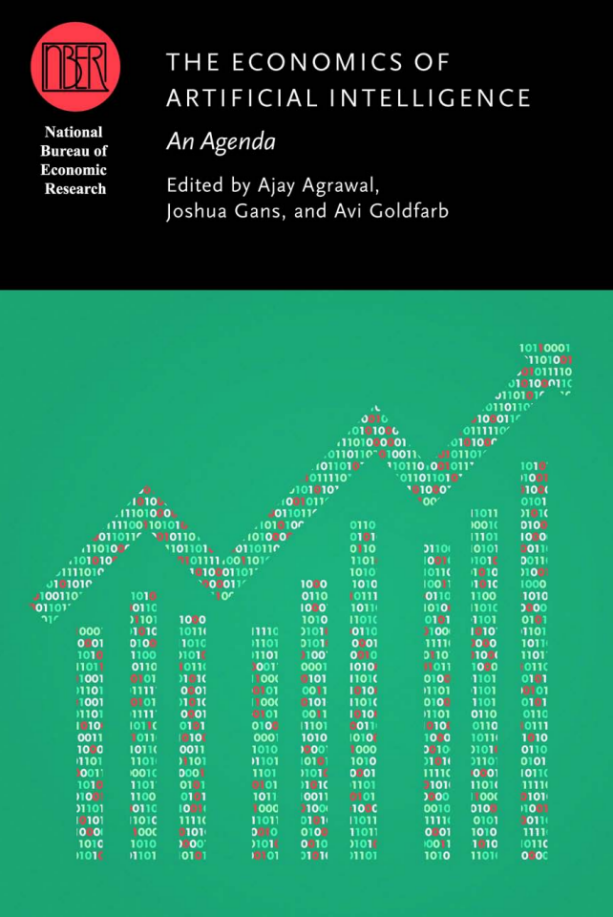
Figure 1. Cover of The Economics of Artificial Intelligence: An Agenda
Background: Economic Transformation and Challenges in the Age of Artificial Intelligence
In recent years, the rapid development of artificial intelligence technology and its widespread application in society and the economy have become a global focus. Since the early 2010s, the number of patents and applications related to machine learning and big data has grown rapidly, marking a new stage in the development of AI. The powerful computational capabilities of modern computers, combined with the widespread availability of data across economic, social, and political life, enable AI technologies to extract key patterns of human behavior through complex mathematical and statistical methods.
This technological progress has not only attracted widespread attention from technical experts, economists, policymakers, and social engineers, but has also sparked intense debates about the impact of AI on society and the economy. The Economics of Artificial Intelligence: An Agenda aims to provide new perspectives and methodologies for economic research in the AI era. It not only explores the potential of AI as a general-purpose technology, but also deeply analyzes its multidimensional impacts on economic growth, employment, inequality, and regulation, offering valuable theoretical support and practical guidance for policymakers and the academic community. By examining the profound influence of AI on the economy and society, the book provides important references for addressing future challenges and opportunities.
Core Theoretical Framework: Economic Roles and Mechanisms of Artificial Intelligence
The Economics of Artificial Intelligence: An Agenda focuses on the economic impacts of AI, examining its roles and underlying mechanisms across multiple dimensions. The book argues that AI has the potential to become a general-purpose technology, widely applicable across various fields and continuously evolving. Like historical general-purpose technologies such as the steam engine and electricity, AI may not immediately lead to significant productivity gains in its early stages, but its impact will gradually emerge over time as complementary infrastructures develop. However, this process may involve time lags due to organizational adjustments and skill adaptation.
At the same time, the impact of AI on the labor market is similar to previous waves of automation: while automation may eliminate certain jobs, it can also create new ones driven by emerging demand. Nevertheless, this transition may involve high adjustment costs, with short-term mismatches between newly required skills and existing workforce capabilities.
The book also highlights that data will become a key resource for firms in the future, and its ownership and usage will influence market competition and innovation. Improper use of data may lead to issues such as privacy violations and algorithmic bias. In the international economic context, data-driven innovation may even trigger strategic competition among countries, making it necessary to design policies that balance different interests and ensure healthy technological development.
Regarding its impact on economic research, AI technologies—especially machine learning—provide new methods and tools for economists. Data-driven empirical research has already transformed economics from a purely theoretical discipline to a more empirical one. However, while current AI applications focus on correlations and statistical patterns, economics emphasizes causal relationships. Therefore, economists must adapt their methodologies to improve causal inference, which is considered the next major challenge in the field.
Methodological Innovation: The Integration of Artificial Intelligence and Economics
In terms of economic modeling, the “task-based model” proposed by Acemoglu and Restrepo decomposes the impact of AI on employment into a dynamic interaction between the “displacement effect” and the “reinstatement effect.” This model not only quantifies the impact of automation on the labor market but also reveals how the creation of new tasks can offset job losses through demand expansion.
Agrawal and colleagues propose a “recombinant growth model,” which approaches innovation from the perspective of combinatorial processes. It views AI as a tool to overcome the “curse of dimensionality” in knowledge production, accelerating effective combinations of technological elements and thereby promoting economic growth. This model extends Romer’s endogenous growth theory into high-dimensional and complex scenarios, providing a micro-foundation for understanding AI-driven innovation waves.
Varian redefines the nature of production factors through data economics, explaining how the non-rivalrous nature of data and network effects reshape market structures. This framework offers a new analytical perspective for antitrust policy in the digital age.
At the methodological level, Athey introduces reinforcement learning-based policy evaluation methods that overcome the static limitations of traditional causal inference, enabling real-time simulation and adjustment of policy effects through dynamic optimization algorithms. Camerer, on the other hand, treats AI systems as experimental platforms for behavioral economics, exploring how algorithms can serve both as “tools for correcting behavioral biases” and as “mechanisms for exploiting cognitive weaknesses.” This bidirectional interaction model opens new pathways for studying decision-making mechanisms in the digital era.
Academic and Practical Implications: Interdisciplinary Integration and the Future
As a landmark work at the intersection of economics and artificial intelligence, The Economics of Artificial Intelligence: An Agenda provides key theoretical frameworks and action guidelines for academia, policymakers, and practitioners by analyzing the profound impact of AI technologies on the economy and society. Its core value lies not only in filling the theoretical gap of traditional economics in explaining emerging technological revolutions, but also in addressing social challenges and ethical debates in the AI era from an interdisciplinary perspective.
By deeply integrating the unique characteristics of AI technologies with traditional economic theories, the book directly responds to the practical needs of policymaking and corporate strategy. More importantly, it confronts the ethical challenges posed by AI and seeks to find a balance between efficiency and fairness. Through the integration of perspectives from economics, computer science, law, and ethics, it builds a bridge for cross-disciplinary dialogue, helping economists understand the underlying logic of technology while guiding technologists to consider its societal impacts.
The book sets a comprehensive agenda for the economics of artificial intelligence and has become an authoritative reference in the field in subsequent years.
Author Introduction

Figure 2. Ajay Agrawal
Ajay Agrawal is the Geoffrey Taber Chair in Entrepreneurship and Innovation and Professor of Strategic Management at the Rotman School of Management, University of Toronto. His research focuses on the economics of artificial intelligence, innovation, and entrepreneurial finance. He is the founder of the Creative Destruction Lab, a research associate at the National Bureau of Economic Research, and a member of the Order of Canada. He has received the Rotman MBA Teaching Award seven times and the Martin–Lang Teaching Excellence Award. His work has made significant contributions to both academic research and practical applications in AI and innovation. He has co-authored several bestselling books on the economics of AI, including Prediction Machines: The Simple Economics of Artificial Intelligence and Power and Prediction: The Disruptive Economics of Artificial Intelligence.

Figure 3. Joshua Gans
Joshua Gans is Professor of Strategic Management at the Rotman School of Management, University of Toronto, holder of the Jeffrey S. Skoll Chair in Technical Innovation and Entrepreneurship, and Chief Economist at the Creative Destruction Lab. His research focuses on the economic drivers of technological innovation, scientific progress, digital strategy, and antitrust policy. He has contributed to several bestselling books on the economics of artificial intelligence, including Prediction Machines and Power and Prediction. His research and teaching provide important theoretical support and practical guidance for understanding the economic impacts of technological change.
Figure 4. Avi Goldfarb
Avi Goldfarb is the Rotman Chair in Artificial Intelligence and Healthcare at the Rotman School of Management, University of Toronto, as well as Professor of Marketing, Chief Data Scientist at the Creative Destruction Lab, and faculty member at the Vector Institute and the Schwartz Reisman Institute for Technology and Society. His research focuses on opportunities and challenges in the digital economy, with publications spanning marketing, statistics, law, management, medicine, political science, refugee studies, physics, computer science, and economics. He has co-authored bestselling books such as Prediction Machines and Power and Prediction, and his work has been cited in reports by the White House, European Commission, The New York Times, and The Economist.
Sources of text and
images:
https://www.utoronto.ca/news-celebrates/ajay-agrawal-recognized-honorary-degree-university-calgary
https://discover.research.utoronto.ca/23808-joshua-gans
https://www-2.rotman.utoronto.ca/~agoldfarb/