



 2025-04-02 21:20:42
Series Introduction:
This series of posts on economic statistics publications aims to provide clear and accessible interpretations of influential works in economic statistics worldwide. In addition to books published by academic presses, it also includes methodological manuals and thematic paper collections published by international organizations (such as OECD, UN, World Bank, IMF, EU), doctoral dissertations in economic statistics, and selected Working Papers from economic research institutions.
Book Information:
OECD (2004), Understanding Economic Growth: A Macro-level, Industry-level, and Firm-level Perspective, OECD Publishing, Paris, https://doi.org/10.1787/9789264019331-en.
Introduction: The Puzzle of Economic Growth
Why do some countries sustain long-term growth while others stagnate? Is it the accumulation of capital, or the power of innovation and institutions that plays the dominant role? Under the forces of globalization and technological waves, traditional growth models seem insufficient to fully answer this question.
The differences in growth performance among OECD member countries in the 1990s reignited academic debates on the fundamental drivers of economic growth. The book Understanding Economic Growth: A Macro-Level, Industry-Level, and Firm-Level Perspective provides a comprehensive exploration of the multiple factors influencing economic growth in OECD countries. Commissioned by the Organisation for Economic Co-operation and Development (OECD), this study goes beyond the traditional single perspective of capital accumulation and labor input, aiming to deconstruct the complexity of economic growth.
Through a three-level perspective—macro, industry, and firm—it reveals the multiple forces shaping economic growth: like a complex symphony, technological innovation, human capital, policy environment, and market competition interact dynamically. This study offers new answers for understanding the drivers of contemporary economic growth and provides guidance for scholars and policymakers in achieving sustainable growth.
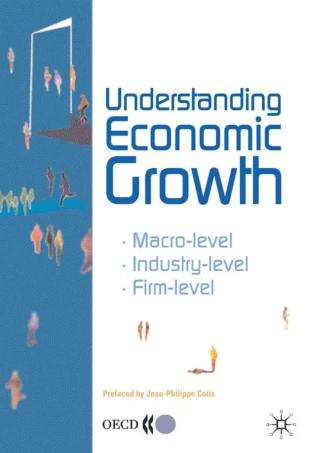
Figure 1. Cover of Understanding Economic Growth
Theoretical Framework and Methodology
The theoretical framework of Understanding Economic Growth integrates perspectives from traditional neoclassical growth theory and endogenous growth models, with particular emphasis on the roles of technological innovation, human capital, and institutional quality. It argues that economic growth is not solely determined by capital accumulation, but is also deeply influenced by the efficiency of labor and capital utilization, the pace of technological progress, and the effectiveness of policy governance.
The study uses a dataset covering 21 OECD countries from 1971 to 1998 and applies various advanced econometric methods, including productivity decomposition, the Hodrick–Prescott (HP) filter, and panel data regression analysis. These methods help uncover the internal drivers of economic growth and explain how technological innovation, regulatory reform, and human capital development contribute to productivity growth across countries, as well as identify the specific policy and institutional conditions that promote or hinder this process.
The book analyzes growth mechanisms across macroeconomic, industry, and firm levels, while systematically examining the actual contribution of information technology (IT) at each level. It highlights the importance of technological progress and human capital, as well as the crucial role of national institutions and regulatory frameworks in shaping economic outcomes.
The book includes more than 50 data charts, providing readers with unique insights into the nature of economic growth. During the peak of the “new economy” around 2000, IT was expected to completely reshape OECD economies and generate enormous benefits. However, with the recent economic slowdown, many myths surrounding IT have been dispelled. What is the true contribution of information technology to economic growth? The book provides a comprehensive perspective and offers new insights into this issue.
Macroeconomic Analysis of Growth Performance in OECD Countries

At the macro level, the study reveals significant differences in economic growth among OECD countries during the 1990s. These differences are mainly attributed to variations in labor utilization, technology adoption, and policy frameworks.
Some countries, such as the United States, Ireland, South Korea, and Australia, exhibited strong growth momentum, largely due to higher labor participation rates and more effective use of human capital.
In contrast, Japan and many continental European economies performed more weakly, with rising or persistently high unemployment rates leading to slower overall productivity growth. Their lagging performance is mainly attributed to structural problems in labor markets and delays in technology adoption.
Technological progress, particularly the diffusion of information technology (IT), is emphasized as a key driver of economic growth. The study identifies three core factors behind cross-country productivity differences: IT investment, the size of the IT sector, and the allocation of IT technologies. This transformation from “intangible” technological progress to “tangible” productivity growth highlights the importance of creating a favorable environment for innovation.
In addition, institutional frameworks and regulatory environments significantly influence how countries adopt and benefit from new technologies.
Industry-Level Analysis: Technological Progress, Market Structure, and Regulation

At the industry level, the study shows how technological progress, policy environments, and market structures affect productivity growth.
In particular, IT-producing and IT-using industries have significantly boosted productivity in many OECD countries. This growth is driven by advances in the production of new technology goods, which reduce prices and stimulate real output growth.
However, there are significant differences across countries in terms of the types of IT products produced and the pace of technological advancement.
Market competition and regulation also play critical roles in productivity growth. The study finds that strict product market regulations and labor laws negatively affect industry productivity, especially in sectors with large technology gaps, as they restrict the adoption of new technologies and the transfer of international technologies.
In contrast, deregulation promotes innovation and technological progress, and strong competition combined with flexible policies in high-tech industries can effectively accelerate technology adoption and productivity improvement.
Firm-Level Analysis: Innovation, Entrepreneurship, and Growth
At the firm level, the study focuses on how individual firms drive economic growth through innovation, productivity improvement, and resource reallocation.
It finds that within-firm growth contributes less to total factor productivity than to labor productivity, while a large portion of overall labor productivity gains comes from resource reallocation across firms.
Specifically, high-productivity firms expand and gain market share, while less efficient firms exit the market—a process often referred to as “creative destruction.”
This dynamic varies across countries depending on regulatory environments and market conditions.
Entrepreneurship also plays a crucial role in economic growth, with more flexible regulatory environments typically associated with higher levels of entrepreneurial activity. This highlights the importance of creating a supportive environment for entrepreneurship in the context of technological innovation.
Policy Implications
From macro, industry, and firm-level perspectives, this study reveals the multidimensional nature of modern economic growth and provides theoretical and practical guidance in the context of global digitalization and technological transformation.
Its value lies not only in theoretical innovation—challenging traditional growth paradigms centered on capital accumulation—but also in empirically demonstrating the dynamic coupling among human capital, technological innovation, and institutional regulation.
It offers policymakers a new perspective on understanding economic growth as an emergent outcome of complex interactions across different levels.
The book highlights the crucial role of institutions in shaping growth outcomes. Data show that differences in technology adoption and sustained growth capacity across countries largely stem from variations in institutional constraints faced by firms.
This relationship is especially evident at the industry level: in markets with flexible regulatory frameworks and strong competition, firms are more likely to translate technological investment into productivity gains.
This finding directly points to the core of policymaking—improving institutional quality and optimizing regulatory design may be key to unlocking growth potential.
The productivity-enhancing effects of information technology are quantitatively validated in the study, but their realization depends on a clear “institutional threshold effect.”
In economies with well-developed education systems and strong R&D incentive mechanisms, IT investment often triggers cascading innovation.
In contrast, mismatches between labor skills and digital transformation needs, or barriers to market entry that hinder technology diffusion, can lead to a “digital investment trap.”
This suggests that policymaking must adopt a cross-sectoral approach, integrating talent development, competition policy, R&D support, and data governance to fully translate technological change into sustainable growth.
Organization Introduction
The Organisation for Economic Co-operation and Development (OECD) is an intergovernmental international economic organization composed of 38 market economy countries. Founded in 1961 and headquartered in Paris, France, its mission is to promote economic growth, social well-being, and environmental sustainability among member countries, while advancing global trade and economic policy coordination.
Through data collection and analysis, policy research, and policy recommendations, the OECD helps member countries address economic, social, and governance challenges brought by globalization, while also seizing its opportunities.
The organization conducts research and policy analysis in areas such as education, environment, public finance, labor markets, trade, and investment. Its research outputs and reports serve as important references for governments, policymakers, and researchers worldwide.
Download link: Understanding Economic Growth | OECD