



 2025-04-03 21:26:30
Series Introduction:
This series of posts on economic statistics publications aims to provide clear and accessible interpretations of influential works in economic statistics worldwide. In addition to books published by academic presses, it also includes methodological manuals and thematic paper collections published by international organizations (such as OECD, UN, World Bank, IMF, EU), doctoral dissertations in economic statistics, and selected Working Papers from economic research institutions.
Book Information:
Estimating the Size and Growth of Unrecorded Economic Activity in Transition Countries: A Re-evaluation of Electric Consumption Method Estimates and their Implications. By Edgar L. Feige and Ivica Urban. William Davidson Institute Working Paper Number 636, December 2003
Unrecorded Economy and the Growth Puzzle of Transition Countries
Why are the trajectories of economic recovery in transition countries so uneven? When official statistics depict dramatic fluctuations in GDP, is the true economic pulse obscured by a large volume of activities hidden beyond formal reporting systems? During the 1990s, as Central and Eastern Europe and former Soviet Union countries transitioned toward market economies, a vast and concealed unrecorded economy quietly expanded—it not only served as a crucial source of livelihood for households but also reflected institutional deficiencies such as high tax burdens and corruption. Traditional tools such as the Electricity Consumption Method (ECM) were once regarded as the key to unlocking this “economic black hole,” yet their estimates frequently fell into contradictory results: when models produced “negative” estimates of the unrecorded economy for countries like Poland, one cannot help but ask whether statistical illusion has obscured the truth, or whether the methodology itself contains fatal flaws. The paper Estimating the Size and Growth of Unrecorded Economic Activity in Transition Countries: A Re-evaluation of Electric Consumption Method Estimates and their Implications was born out of this cognitive crisis. Rather than merely patching existing models, it uses sharp empirical analysis to dissect the theoretical core of ECM—it overly relies on fragile initial assumptions, ignores structural changes in energy efficiency, and reduces complex informal economic activities to a linear function of electricity consumption. By reconstructing cross-country panel data from 1989 to 2001 and correcting baseline assumptions using migration surveys and household budget data, the study reveals a disruptive fact: the unrecorded economy is by no means a static “grey enclave”; instead, its dynamic interaction with the official economy constitutes the real logic of the transition process. When Russia’s official GDP shrank at an average annual rate of 3.6%, the unrecorded sector grew at 5.7%, narrowing the decline of total economic activity (TEA) to 1.5%. This “underground buoyancy” effect not only rewrites the narrative of economic decline but also exposes the blind spots of traditional policy tools. The value of this study lies in providing a dual perspective for transition economies: on the one hand, it warns academia against the “precision trap” of methodology; on the other hand, it points policymakers toward a crucial direction—only by penetrating statistical fog and examining tax reform, anti-corruption efforts, and market liberalization within the framework of total economic activity (TEA) can the true path to sustainable growth be unlocked.
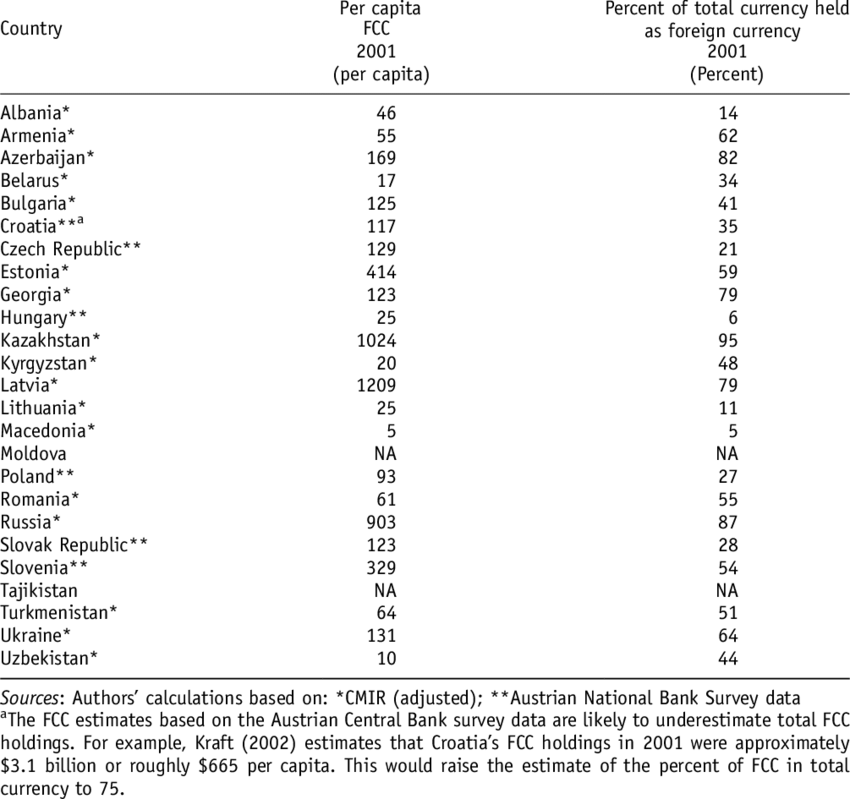
Figure 1. Currency substitution phenomenon (dollarization) during economic transition
Core Research Findings
Methodological Critique and Model Reconstruction
Early studies (such as Kaufmann & Kaliberda, 1996) assumed a fixed elasticity between electricity consumption and GDP growth (e.g., 0.9 for Central and Eastern Europe and 1.15 for the former Soviet Union), estimating the size of the unrecorded economy based on the difference between electricity consumption growth and official GDP growth. However, the paper points out that this approach heavily depends on initial baseline assumptions—such as the proportion of the unrecorded economy in TEA in 1989—and ignores changes in energy efficiency, industrial restructuring, and electricity price fluctuations, leading to distorted results, which constitute the core defects of the traditional ECM. The study proposes improvements including extending the ECM model using updated data from 1990–2001, comparing different baseline assumptions (such as Johnson’s 12% versus Alexeev-Pyle’s 18%–32%) to reveal sensitivity to initial conditions, introducing a Modified ECM (MECM) that controls for electricity prices, industrial structure, and privatization levels to filter non-economic disturbances, and applying Generalized Least Squares (GLS) to allow heterogeneous country-specific constants and improve model robustness.
Empirical Analysis: Size Estimation and Dynamic Trajectories
Through in-depth analysis of country cases, the study identifies contradictions in traditional ECM results, such as “negative” unrecorded economy estimates in Poland and Romania, exposing logical flaws in the model; adopting higher baseline assumptions (Alexeev-Pyle) alleviates some contradictions but does not fully resolve issues in Central and Eastern European countries. The unrecorded economy is found to be negatively correlated with official GDP, indicating a substitution effect. For example, in Russia (1990–2001), official GDP declined by 3.6% annually, while the unrecorded economy grew at 5.7%, cushioning the decline of total economic activity. Cross-country comparisons show that former Soviet states generally have larger unrecorded economies (e.g., Georgia 55%, Kyrgyzstan 64%), reflecting institutional fragility and tax evasion culture, while Central and Eastern European countries experienced declines associated with EU integration (e.g., Hungary and the Czech Republic), though some countries rebounded due to policy failures (e.g., Albania at 60%).
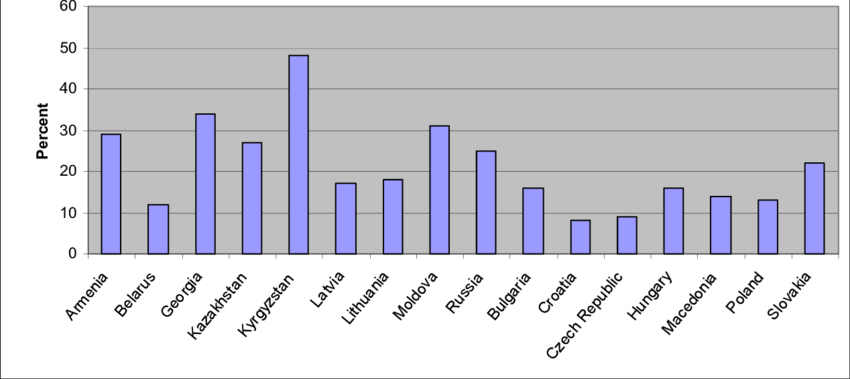
Figure 2. Share of unrecorded economy in TEA (1990–2001)
Data Comparison and Policy Implications
The paper notes that OECD estimates of the non-observed economy (NOE), such as Ukraine’s 16.7%, are significantly lower than ECM estimates (57.1%), mainly because ECM overestimates non-electricity-intensive activities such as services and informal finance. The authors suggest that in the short term, attention should focus on the growth rate of the unrecorded economy rather than its absolute size to better identify policy effects such as tax reform and anti-corruption efforts, while in the long term, improving national accounts transparency and adopting mixed methods (electricity consumption, monetary flow, and household surveys) can enhance data reliability.
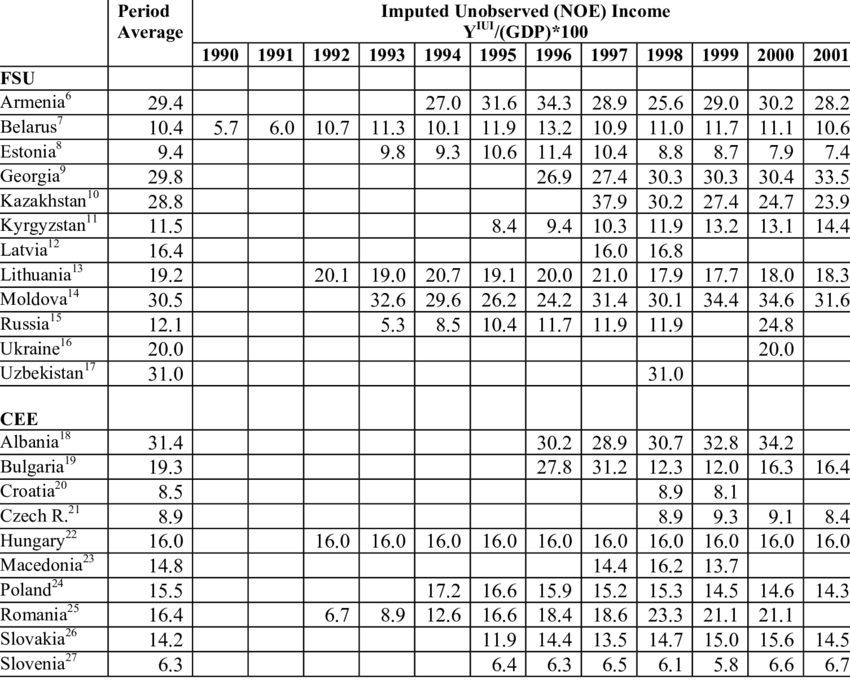
Figure 3. OECD or author estimation methods
Theoretical Extension and Future Directions
This paper not only “deconstructs” methodology by exposing the fragility of traditional ECM but also “constructs” a new theoretical framework by introducing dynamic analysis and cross-country panel models, opening new paths for understanding the complexity of transition economies. It forces scholars to recognize that under statistical uncertainty, multi-method validation is more reliable than the illusion of precision from a single model. For contemporary Global South countries facing challenges from informal economies, this study remains highly relevant—it highlights that the unrecorded economy is both a result of institutional failure (such as corruption and high taxation) and a source of employment and survival. The study advocates shifting from static size estimation to dynamic interaction analysis, such as using panel data to explore causal relationships between the unrecorded economy and variables like rule of law and foreign investment inflows.Author Introduction
Edgar L. Feige
Edgar L. Feige is Professor Emeritus of Economics at the University of Wisconsin–Madison. He received his B.A. from Columbia University in 1958 and his Ph.D. from the University of Chicago in 1963, and has taught at Yale University, the University of Essex, Erasmus University, and Leiden University, where he held the Klevering Chair. He has received numerous honors, including the Ford Foundation Dissertation Award, fellowships at the Netherlands Institute for Advanced Study, and multiple Fulbright Scholarships, and has served as a visiting scholar in Croatia and Russia. He has authored over 80 books and academic articles and is widely regarded as the “father of underground economy analysis.” His works include The Demand for Liquid Assets, The Underground Economies: Tax Evasion and Information Distortion, and The Underground Economies in Transition. He has served as a consultant to institutions such as the U.S. Treasury, the Federal Reserve, the IMF, and multiple central banks, and has participated in research initiatives on transition economies. His recent work focuses on unrecorded economic activity, the impact of cryptocurrencies, and tax compliance behavior.
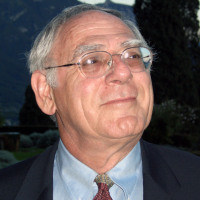
Figure 4. Edgar Feige
Ivica Urban
Ivica Urban received his B.A. in Economics in 2002 and M.Sc. in 2006 from the University of Zagreb, and his Ph.D. in Economics in 2010 from the University of Ljubljana, specializing in tax-benefit microsimulation and income distribution. He has participated in academic training at institutions such as the University of Essex and Utrecht University, focusing on social data analysis, multivariate statistics, and tax policy modeling. Since 2002, he has been a researcher at the Institute of Public Finance in Croatia, concentrating on taxation systems, social security, and income inequality. He is also a core member of EUROMOD Croatia, promoting the development of digital tools for tax and welfare policy evaluation. He has led research on Croatian tax reforms, including VAT adjustments and their impact on social equity, proposing that simplified tax systems can improve compliance, which was adopted in Croatia’s 2014 tax reform. He has developed labor supply models based on discrete choice theory and contributed to international projects such as Mapping the Shadow Economy (2024–2025), proposing hybrid data methods to improve measurement accuracy. His work bridges academic research and policymaking, playing a key role in tax reform and social policy optimization in Central and Eastern Europe.
Figure 5. Ivica Urban
Sources of
images:
https://www.researchgate.net/profile/Edgar-Feige
https://www.researchgate.net/publication/23747409_Estimating_the_Size_and_Growth_of_Unrecorded_Economic_Activity_in_Transition_Countries_A_Re-evaluation_of_Electric_Consumption_Method_Estimates_and_their_Implications
https://wisc.academia.edu/EdgarFeige
https://www.ijf.hr/en/researchers/details/ivica-urban,1100.html