


 2025-04-14 22:10:42
Series Introduction:
This series of posts on economic statistics publications aims to provide clear and accessible interpretations of influential works in economic statistics worldwide. In addition to books published by academic presses, it also includes methodological manuals and thematic paper collections published by international organizations (such as OECD, UN, World Bank, IMF, EU), doctoral dissertations in economic statistics, and selected Working Papers from economic research institutions.
Book Information:
Fisher, Tony (2009), The Data Asset: How Smart Companies Govern Their Data for Business Success, John Wiley & Sons.
Data Governance: The Key Driver of Enterprise Success
In the wave of digital transformation, data has become one of the most valuable assets of modern enterprises. The Data Asset: How Smart Companies Govern Their Data for Business Success, as its title suggests, reveals the central role of data governance in contemporary organizations. The book not only demonstrates how data serves as a driving engine for business development, but also explores in depth how data governance enhances decision-making quality, optimizes operational efficiency, and strengthens competitiveness. Drawing on extensive industry experience and deep insight, Tony Fisher presents a comprehensive picture of data-driven success. The uniqueness of this work lies in its combination of theory and practice: through numerous real-world cases, it illustrates how enterprises across industries and scales achieve breakthroughs through effective data governance. From risk control and cost optimization to revenue growth, each chapter offers practical strategies that help organizations navigate the vast ocean of data and uncover value. In an era where data is ubiquitous, both executives and data professionals can gain valuable knowledge and inspiration from this book, which serves not only as a guide to data governance but also as a reference for enterprise strategy.
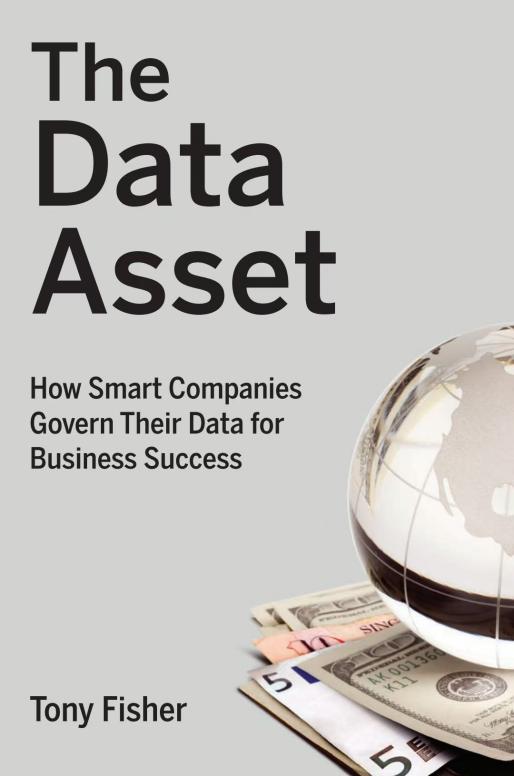
Figure. Cover of The Data Asset: How Smart Companies Govern Their Data for Business Success
Why Data Governance Matters
The author emphasizes that data quality is a critical determinant of enterprise success. High-quality data enables firms to better understand customer needs, optimize operational processes, reduce risks, and ultimately enhance competitiveness. However, many organizations suffer from inconsistent data quality due to the absence of effective governance strategies, which undermines decision-making and operational efficiency. The book highlights that data governance is not solely the responsibility of IT departments but a systemic initiative requiring organization-wide participation. By establishing a clear governance framework, enterprises can ensure data accuracy, consistency, and reliability, thereby providing strong support for strategic decision-making.
Understanding the Data Governance Maturity Model
One of the core contributions of the book is the Data Governance Maturity Model. It categorizes enterprise data governance capability into four stages: Undisciplined, Reactive, Proactive, and Governed. Each stage corresponds to different management practices, technological capabilities, and business integration levels. In the Undisciplined stage, data management is chaotic, lacking unified standards and processes; in the Reactive stage, organizations begin to recognize data issues and take corrective actions, though often in a fragmented manner; in the Proactive stage, data is treated as a strategic asset, with cross-departmental collaboration and unified governance strategies enabling integration and optimization; and in the Governed stage, enterprises reach a high level of maturity where data quality is well ensured and fully supports automated business processes and strategic decision-making.
The author further elaborates on the characteristics, challenges, and transition paths of each stage. For example, organizations in the Undisciplined stage should begin with data quality audits and cleansing to build foundational awareness; those in the Reactive stage should integrate governance into business processes using data quality tools; Proactive-stage enterprises should establish cross-functional governance teams and unified standards; while Governed-stage organizations should enhance automation and intelligence through technologies such as service-oriented architecture (SOA) to achieve deep integration between data and business processes.
Data Governance in Practice and Technical Support
Beyond theoretical frameworks, the book provides numerous case studies and best practices to guide implementation. Fisher analyzes successful experiences across industries to demonstrate the tangible value of data governance in areas such as risk control, cost reduction, and revenue enhancement. For instance, a global chemical manufacturer achieved procurement data standardization through product data rules and automated classification, saving up to 5% in annual indirect procurement costs. Walmart improved supply chain data management to enable rapid replenishment from manufacturers to store shelves, significantly enhancing customer satisfaction and operational efficiency. These examples vividly illustrate the practical impact of data governance.
From a technological perspective, the book introduces key tools and systems required for effective governance, including data quality tools, data integration technologies, data discovery and auditing tools, and data synchronization systems. Fisher stresses that technology is a means rather than an end. Enterprises should select appropriate tools based on their governance maturity and business needs—for example, starting with simple data quality tools in early stages and progressing to advanced integration platforms for cross-departmental collaboration in more mature stages.
The Role of People and Processes in Data Governance
Successful data governance depends not only on technology but also on people and processes. The author emphasizes the need for cross-functional collaboration involving business experts, IT professionals, data stewards, and senior management. Each role contributes uniquely: business experts define requirements and rules, IT ensures infrastructure and security, data stewards manage and maintain data, and leadership provides strategic direction and support.
The book also underscores the importance of cultivating a data governance culture—an organizational mindset that values data quality and continuous improvement. Through training, incentive mechanisms, and performance evaluation, enterprises can foster awareness and capability in data governance, ensuring long-term success.
Author Introduction

Tony Fisher
Tony Fisher is a renowned expert in data governance and business intelligence. With a strong background in data analytics and information technology, he has developed deep insights into the role of data in modern enterprises. His career began in data analysis and evolved into leadership in governance and business intelligence, where he held key positions in major organizations, driving data-driven decision-making and operational optimization.
Through his work The Data Asset, Fisher provides a structured framework for evaluating and improving data governance capabilities, influencing organizations worldwide. He actively participates in real-world governance projects, helping companies address data management challenges. His philosophy centers on the belief that data is one of the most valuable enterprise assets, and that effective governance is essential to unlocking its full potential. By fostering a strong data culture that prioritizes accuracy, integrity, and responsible use, organizations can achieve sustainable competitive advantage.
Image
source:
http://www.manageit.me/speakers/Tony_Fisher.html