


 2025-04-21 22:22:11
Series Introduction:
This series of posts on economic statistics publications aims to provide clear and accessible interpretations of influential works in economic statistics worldwide. In addition to books published by academic presses, it also includes methodological manuals and thematic paper collections published by international organizations (such as OECD, UN, World Bank, IMF, EU), doctoral dissertations in economic statistics, and selected Working Papers from economic research institutions.
Book Information:
Jorgenson, Dale W., Ho, Mun S., & Stiroh, Kevin J. (2005), Productivity, Volume 3: Information Technology and the American Growth Resurgence.
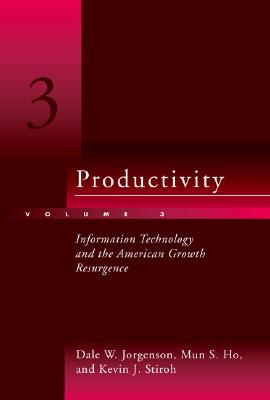
Figure 1. Cover of Productivity: Information Technology and the U.S. Productivity Revival
Introduction
Amid structural transformations in the global economy and the rapid evolution of technological paradigms, information and communication technology (ICT) has emerged as a central driver of total factor productivity (TFP) growth, making its economic impact a core issue in contemporary growth theory. Productivity: Information Technology and the American Growth Resurgence, authored by Dale W. Jorgenson, Mun S. Ho, and Kevin J. Stiroh, applies a neoclassical growth accounting framework to systematically analyze the productivity revival of the U.S. “new economy” during 1995–2000. By constructing an advanced measurement model that incorporates both technological upgrading and improvements in labor quality, the study quantifies the contribution of ICT investment to productivity growth and provides one of the earliest clear explanations of how technological progress translates into economic expansion.
Systematic Analysis: Information Technology and U.S. Economic Recovery
The book offers an in-depth examination of the relationship between ICT and U.S. economic growth, demonstrating that ICT played a decisive role in the post-1995 economic resurgence. Advances in semiconductor technology significantly reduced the prices of ICT goods, with annual declines of 31% for computers, 1.31% for software, and 4.16% for telecommunications equipment, greatly stimulating investment by firms and households. As a result, the contribution of ICT to economic growth rose from 0.37% in 1989–1995 to 0.64% in 1995–2000.
At the industry level, ICT-producing sectors accounted for only 2.9% of GDP but contributed 25% of output growth, while ICT-using industries, representing 25% of GDP, also contributed 25% of growth. Non-ICT industries, comprising 70% of GDP, accounted for the remaining 50% of growth. In terms of capital input, ICT capital grew at an average annual rate of 19.11% between 1977 and 2000, far exceeding the 2.17% growth rate of non-ICT capital. Since 1995, most industries increasingly substituted ICT capital for traditional capital, significantly enhancing productivity.
From an international perspective, ICT investment increased across G7 countries after 1995, with the United States leading in both output and input growth per capita. However, differences in investment patterns and growth models persisted—for example, Japan experienced weaker capital contributions due to insufficient aggregate demand. These findings not only highlight the direct impact of ICT on economic growth but also provide empirical evidence for understanding cross-country differences in technological adoption and development trajectories.
Methods and Data: Foundations of Robust Conclusions
The study’s reliability is ensured by methodological innovation and rigorous data processing. It employs a production possibility frontier framework, modeling total output as a combination of investment and consumption goods, with inputs consisting of capital services and labor services, while TFP is treated as a Hicks-neutral residual. This approach decomposes output growth into weighted contributions of inputs and productivity, enabling precise measurement of each factor’s role in economic growth.
The data sources are extensive and carefully processed. Industry output and intermediate inputs are drawn from the Bureau of Labor Statistics’ input–output time series; capital input is based on the Bureau of Economic Analysis’ reproducible asset accounts; and labor input is derived from the Current Population Survey and decennial census, calibrated against national accounts. Adjustments are made to align software data with updated GDP definitions, and interpolation ensures consistency across benchmark years. These rigorous procedures provide a solid empirical foundation for the analysis.
Analytical Structure: Building a Coherent Research Framework
The book presents a well-structured analytical framework linking ICT development to economic recovery. It begins by tracing the evolution of ICT—from transistors and integrated circuits to Moore’s Law—establishing the technological and price foundations for subsequent analysis. It then applies growth accounting to quantify ICT’s contribution to U.S. economic growth and identify limitations of traditional methods.
The analysis extends to an international comparison of G7 economies, highlighting differences in ICT investment and growth patterns. It further drills down to the industry level, examining 44 sectors to trace the diffusion of ICT across the economy and identify sector-specific contributions to productivity growth. The study concludes by outlining a new research agenda for the internet era, emphasizing the transformative implications of ICT for economic theory and future research directions.
Academic Contributions and Value
Productivity: Information Technology and the American Growth Resurgence is a landmark work in the study of ICT and economic growth. It advances growth accounting theory by incorporating production possibility frontier analysis and offers a comprehensive empirical examination based on detailed industry-level data.
Its contributions can be summarized in three areas: theoretically, it provides a more powerful analytical framework; methodologically, it integrates theoretical modeling with empirical validation; and from a policy perspective, it reveals significant cross-country differences in ICT-driven growth. For researchers, the book serves as both a conceptual guide and a methodological template, covering key aspects such as data processing, variable construction, and model specification.
Although the study has limitations—such as issues with quality-adjusted price indices and the timeliness of industry classifications—it establishes a foundation for future research. In the era of artificial intelligence and big data, its insights remain highly relevant, offering guidance for understanding the evolving relationship between digital technology and economic growth.
Author Introduction

Figure 2. Dale W. Jorgenson
Dale W. Jorgenson is a distinguished professor of economics at Harvard University, renowned for his pioneering work in econometrics and productivity analysis. He has authored numerous influential works, including Productivity: Information Technology and the American Growth Resurgence and Economic Growth and Capital Investment, providing key theoretical frameworks for understanding the role of technology in economic growth. His contributions have earned him prestigious honors, including the John Bates Clark Medal.

Figure 3. Mun S. Ho
Mun S. Ho is an active scholar in economic and environmental policy research, affiliated with Harvard University. His work spans energy systems, environmental policy, and economic analysis, including research on carbon emissions, environmental taxation, and climate policy. He has collaborated extensively with Jorgenson and others on ICT and productivity research, contributing to widely recognized analytical methods used internationally.

Figure 4. Kevin J. Stiroh
Kevin J. Stiroh is a leading researcher in the field of productivity and economic growth, particularly in the context of information technology. His collaborative work with Jorgenson and Ho has significantly advanced understanding of ICT-driven growth, providing both theoretical insights and empirical evidence that have influenced academic research and policy discussions.
Image
sources:
https://m.baike.so.com/gallery/list?eid=8861696&sid=9186813&ghid=first&pic_idx=1
https://cn.chinaproject.harvard.edu/people/mun-s-ho
https://www.newyorkfed.org/aboutthefed/orgchart/stiroh