


 2025-04-22 22:24:41
Series Introduction:
This series of posts on economic statistics publications aims to provide clear and accessible interpretations of influential works in economic statistics worldwide. In addition to books published by academic presses, it also includes methodological manuals and thematic paper collections published by international organizations (such as OECD, UN, World Bank, IMF, EU), doctoral dissertations in economic statistics, and selected Working Papers from economic research institutions.
Book Information:
Cohen, G., & Shinwell, M. (2020), “How far are OECD countries from achieving SDG targets for women and girls? Applying a gender lens to measuring distance to SDG targets”, OECD Statistics Working Papers, No. 2020/02, OECD Publishing, Paris. https://doi.org/10.1787/17a25070-en
In today’s global context, the pursuit of sustainable development has become increasingly prominent, and gender equality, as a critical dimension of sustainability, has attracted growing international attention. Gender equality is not only a fundamental human right but also a foundation for prosperous, modern, and sustainable economies. Ensuring gender equality enables both women and men to fully participate in family life, the labor market, and public affairs. Therefore, assessing how far countries remain from achieving SDG targets related to women and girls is essential for a comprehensive evaluation of sustainable development. This report focuses on OECD countries, identifying the gaps between current conditions and SDG targets for women and girls, and providing an evidence-based foundation for policymaking.
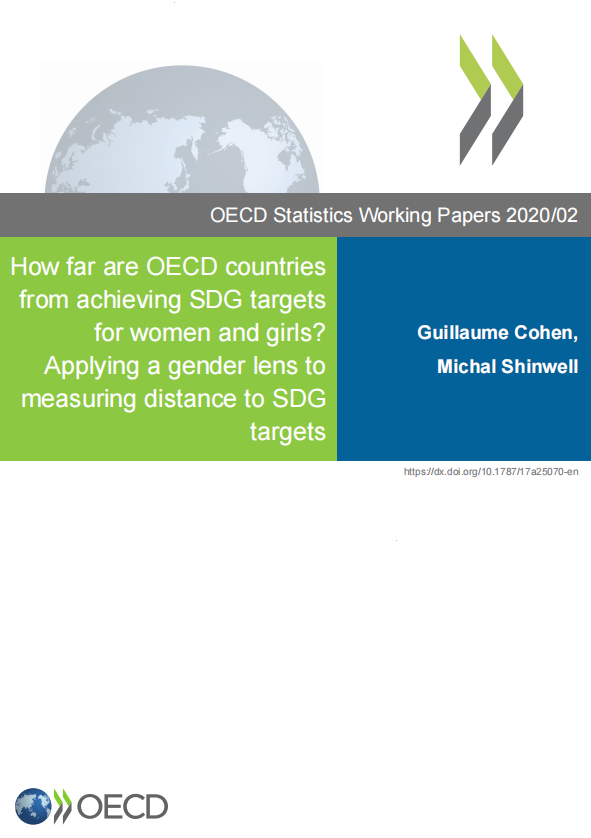
Figure 1. Cover of Applying a Gender Lens to Measuring Distance to SDG Targets
The Importance of Gender Equality in Global Development
In the global development process, the well-being of women and girls has become a key indicator of social progress and sustainable development outcomes. The 2030 Agenda for Sustainable Development establishes gender equality as a standalone goal (SDG 5) and emphasizes the integration of a gender perspective across all goals and indicators. However, OECD countries still face numerous challenges in achieving SDG targets related to women and girls. Gender inequality remains deeply rooted worldwide, with women facing disadvantages in education, employment, and political participation. Despite progress in certain areas, significant barriers persist in accessing high-quality education, entering high-paying labor markets, and attaining representation in decision-making bodies. In addition, limitations in data collection and indicator construction hinder accurate assessment of progress. Against this backdrop, the report evaluates OECD countries’ advancement toward gender-related SDG targets, identifies gaps in data availability, and provides guidance for future policy and statistical development.
Availability and Uneven Distribution of Gender-Related Data
The report first examines the availability and challenges of gender-related data within the SDG framework, emphasizing the importance of identifying gender-relevant indicators and ensuring sufficient data for monitoring progress. It employs two methods to identify such indicators: text analysis, which searches for gender-related terms such as “male,” “female,” and “gender,” and indicator classification, which categorizes indicators into individual-level, policy/system-level, and non-gender-specific groups. Out of 247 global SDG indicators, approximately 45% (102 indicators) are identified as gender-related. However, only 35 of these have sufficient data coverage in OECD countries.
The report also highlights uneven distribution across SDGs: gender-related indicators are concentrated in areas such as poverty, health, education, gender equality, economic participation, and institutions, while environmental goals—such as sustainable production, oceans, and biodiversity—have almost no gender-related indicators. Significant data gaps also exist in energy, inequality reduction, and urban development. Some indicators not explicitly labeled as gender-related may still have important gender dimensions but are excluded due to lack of explicit terminology.
Moreover, gender statistics remain underfunded, with only 13% of countries allocating specific budgets for gender data. Similarly, only 13% of internationally funded statistical development projects include gender-related activities, further limiting data availability and quality.
Progress in Gender Equality and Policy Recommendations
The report finds that OECD countries have made varying degrees of progress in achieving gender-related SDG targets. In areas such as health, poverty, and partnerships, progress is relatively advanced—particularly in maternal mortality, where all OECD countries have met targets, and in reducing communicable and non-communicable disease mortality. However, substantial gaps remain in gender equality, economic participation, and personal security. Women continue to face disadvantages in labor market participation, youth unemployment, managerial earnings, and ICT skills, as well as in safety and exposure to violence.
A key challenge is data availability, particularly for environmental indicators such as water resources, climate, and biodiversity, where gender-disaggregated data are largely absent. The report recommends strengthening gender data collection and monitoring systems and establishing policy priorities to address gender gaps. While women perform well in many areas of education, further efforts are needed in digital skills. Additionally, women remain underrepresented in political and economic decision-making, including national parliaments, local governments, and corporate boards, as well as in innovation-related fields such as research and invention. Achieving the 2030 Agenda will require targeted policies and improved data systems.
Advancing Gender Equality Research and SDG Implementation
This report makes a significant contribution to the study and implementation of gender-related SDGs. It enriches research by providing more precise and nuanced quantitative methods for analyzing gender equality. Through detailed analysis of OECD countries, it offers valuable insights for other regions, helping policymakers identify priority areas for action and improve policy effectiveness.
As part of the global effort to achieve the 2030 Agenda, the report provides monitoring and evaluation tools for gender equality and women’s empowerment. Its interdisciplinary approach, integrating sociology, economics, and political science, promotes cross-disciplinary research and offers new perspectives for understanding gender issues.
Author Introduction

Figure 2. Guillaume Cohen
Guillaume Cohen has worked as a statistical analyst in the OECD Directorate for Industry, Economics and Statistics, and later led the Sustainable Development Indicators Unit within the OECD Environment Directorate. He is currently affiliated with the OECD Statistics and Data Directorate, focusing on the collection and analysis of statistical data related to sustainable development. His work includes research on child well-being and SDGs, as well as OECD countries’ progress toward achieving SDG targets.

Figure 3. Michal Shinwell
Michal Shinwell serves as Head of Strategic Research and Evidence at Camden Council in London. She specializes in developing frameworks for measuring well-being and sustainability and has extensive experience in applying data and evidence to policymaking. She has previously worked at the OECD, Israel’s National Economic Council, and the Ministry of Finance, focusing on sustainability metrics and environmental policy development.
Image
sources:
https://www.kcl.ac.uk/events/sdg-workshops-at-kings-inclusive-economic-growth-sdgs-8-and-10
https://feb.ui.ac.id/michal-shinwell/